The Rhythm of Return
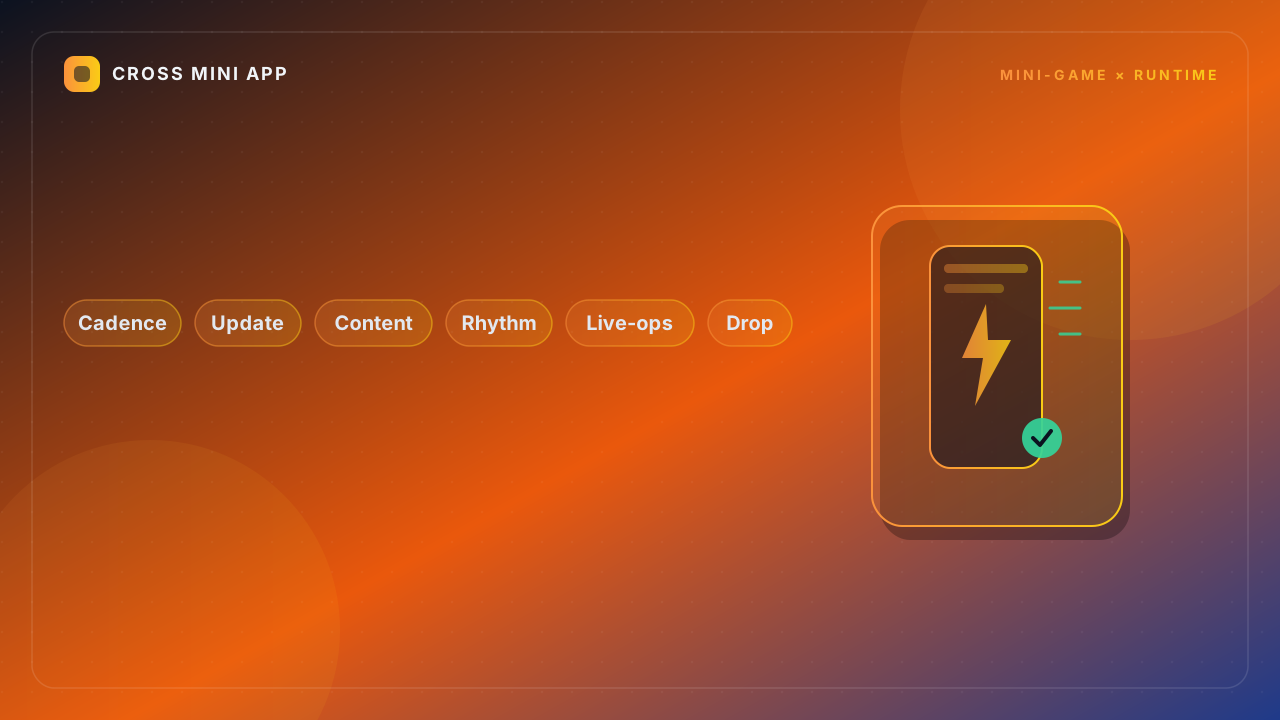
A live game isn't shipped; it's performed. The teams that treat launch as the finish line watch their numbers decay on a curve they could have bent. The teams that win treat every week as a new episode — a small drop, a reason to open the app tonight — and that rhythm is what separates a game people return to from a game people downloaded once. Cadence isn't the size of your updates; it's the predictability of them.
Q: How often should a mini-game update its content?
Often enough that the player expects something, rarely enough that each drop feels like a drop. For most live mini-games that lands around a meaningful update every two to four weeks, backed by smaller weekly beats — a rotating shop, a weekend event, a leaderboard reset. The failure mode is the feast-or-famine calendar: silence for two months, then a giant patch nobody asked for. Players don't want a deluge; they want a reason to check in, and a reason on a known date beats a surprise on an unknown one.
Q: Should updates be big or small?
Small and steady beats big and rare. A giant quarterly update sounds impressive in a roadmap slide and disappears from memory by week two; a steady drumbeat of smaller drops keeps the game in the player's routine. The craft is sequencing: a new character here, a map there, a seasonal skin, a balance tweak — each one a small reason to return, none of them a risk big enough to break the build. Save the large swings for once or twice a year, when you actually have a headline.
Q: How do you keep a cadence going without burning the team?
By decoupling the calendar from the heroics. The teams that burn out ship everything as a fire; the teams that last build a content pipeline — templated events, pre-authored bundles, a release train that runs whether anyone's tired or not. The single biggest lever is authoring content far ahead, so a quiet week is filled by something already made, not something someone stays late to finish. A cadence you can't sustain is worse than no cadence, because breaking the rhythm teaches players not to expect you.
Q: How do you measure if your cadence is actually working?
By retention on the off-weeks, not the launch spike. If your D7 and D30 hold steady through the quiet periods, your rhythm is doing its job; if numbers crater between drops, you're renting attention with events instead of building a habit. Watch the day-after-event dip and the week-without-content flatline, and tune the gap. The goal isn't more updates — it's a return rhythm so reliable that opening the game is just what Tuesday means.
| Beat | Keeps players returning | Burns the game out |
|---|---|---|
| Predictable date | Reason to check in | Feast or famine |
| Small and steady | In the routine | Big patch, forgotten |
| Content pipeline | Sustainable cadence | Heroics, burnout |
| Off-week retention | Habit, not spike | Craters between drops |
Launch is the opening night. The rhythm is the run. Keep the show weekly.