The Ad Players Beg to Watch
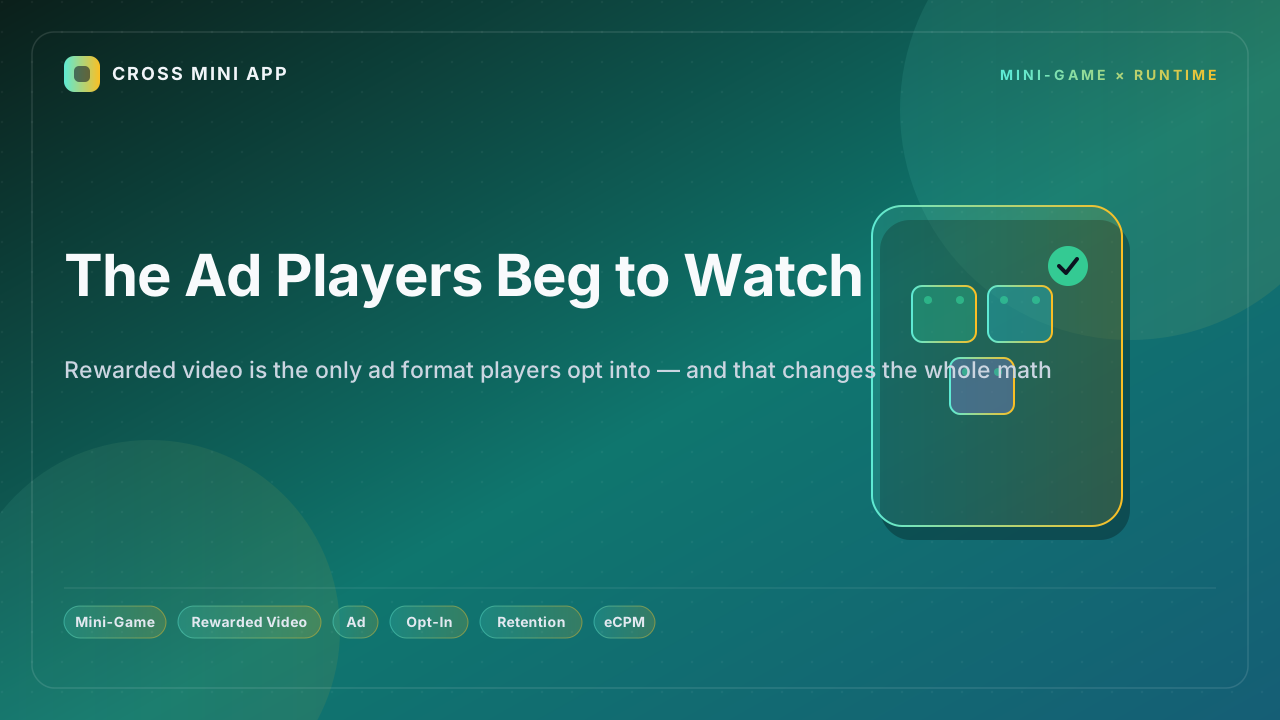
Most ads in a game are an apology. A banner slides in, an interstitial blanks the screen between levels, and the player waits it out like a toll at a broken gate. They didn't ask for it, they resent it, and they'd pay to make it stop. Then there's rewarded video — the one format where the player taps the ad on purpose. That single flip, from interruption to invitation, is why it earns more per impression and breeds less hatred than everything else in the ad toolbox.
A rewarded video is simple: watch this 15-to-30-second clip, get something you wanted in the game. A revive. A double helping of soft currency. A cosmetic you can try before you buy. The player isn't a hostage; they're a customer who walked up to the counter. That changes how they feel about the brand on the screen, and it changes what advertisers will pay to be there.
Why players actually tap
The whole point is agency. An interstitial says "you will watch." A rewarded slot says "want this? here's the button." Players who choose the ad convert better, remember the brand more, and complain less — because they got a thing they valued in exchange. The format naturally sorts the willing from the unwilling, so the people who see the advertiser's message are the people most open to it. That's why eCPM on rewarded inventory runs higher than on forced formats, sometimes two or three times.
| Format | Player's gut reaction | What it's worth to advertisers | The landmine |
|---|---|---|---|
| Banner | background noise | cheap, ignored | blind spots, accidental taps |
| Interstitial | "not now, ever" | mid | rage-quit risk |
| Rewarded video | "yes, gimme" | high eCPM | spoils the player if overused |
| Playable ad | "that's a demo?" | premium | needs real build effort |
The button placement is the real product
A rewarded offer only works if it shows up exactly where a player feels the pinch. Stuck after a tough level? "Watch to revive" beats a game-over screen. Out of stamina? "Watch to refill" beats a timer. Want that skin? "Watch to preview it animated" beats a static thumbnail. Put the offer where the desire already exists and it feels like help, not a shill. Put it where there's no need and it's just another nag.
The studios that do this well treat the rewarded slot as game design, not ad sales. They cap how many times a day you can cash in, so the reward stays special. They never put it on the critical path to progress, so a player who hates ads can still finish the game. Cross that line and your "optional" ad starts to look like a toll — and tolls are what players burn you in reviews for.
Don't let it eat your paying base
Here's the trap nobody warns you about: a great rewarded system can train your whole audience to never open the wallet. If every want can be watched away for free, why would anyone buy? The fix is to design the two sides as complements, not substitutes. Rewarded currency should smooth a bad streak, not bankroll the whole game. The things that really matter — exclusives, pace, identity — stay behind a price. A player who watches three ads to survive a level is also the player most likely to eventually pay to never need those ads again.
On a runtime that keeps the store and the ad logic in your hands, you get to set that balance instead of inheriting someone else's defaults.