

PWA Hit a Glass Ceiling. Here's Why Governed Mini-Programs Keep Winning.
Progressive Web Apps promised one web app for every platform and no app store. In the real world they hit a glass ceiling — iOS limits, invisible in China, weak install intent. Governed mini-programs inherit the host's trust instead.
Cross Mini App Team
September 19, 2026 · 3 min read
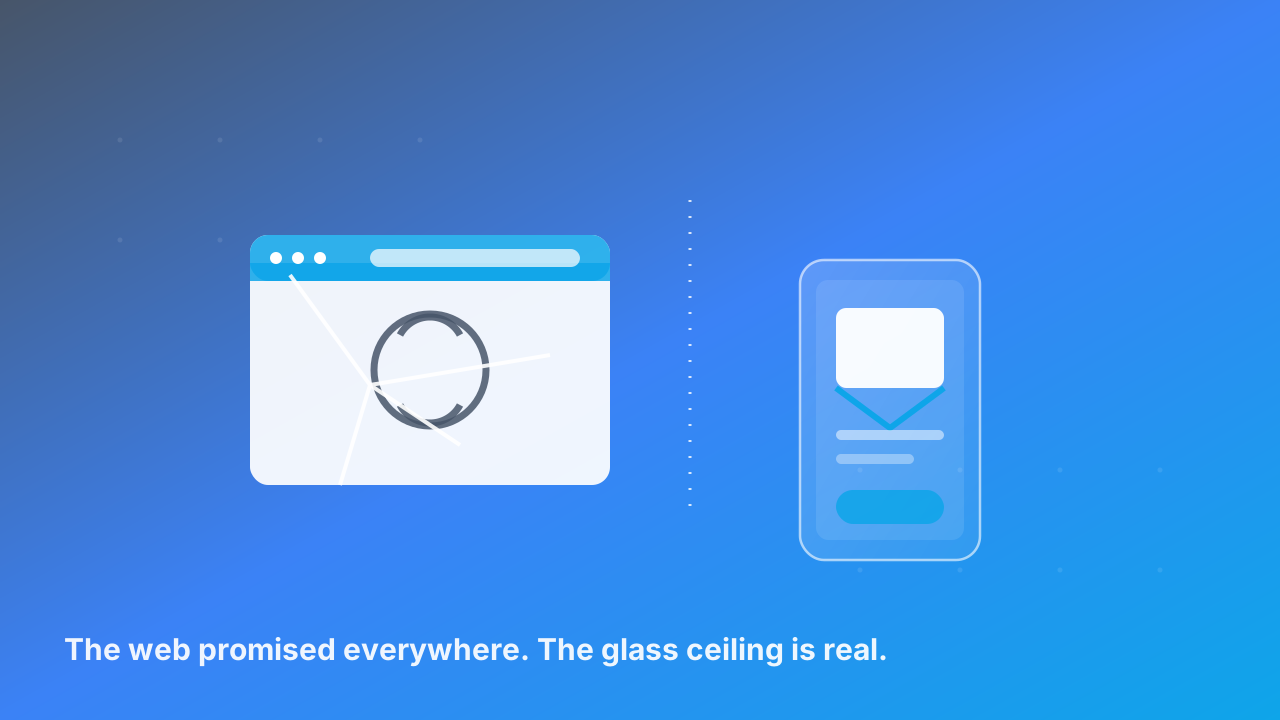
The promise that stalled
A decade ago Progressive Web Apps (PWAs) promised a beautiful deal: build once with web technology, ship to every platform, skip the app store, and reach users straight from a browser link. No review queues, no 30% cut, no per-store rebuilds. For a moment it looked like PWAs would hollow out the native app economy.
They didn't. The PWA story ran into a glass ceiling made of platform reality, not technical limits.
Where the ceiling is
iOS and Safari set the terms. Apple controls the gateway to the most valuable mobile users. For years PWAs on iOS had no push notifications, no badge, and a hidden "Add to Home Screen" flow that most users never discover. Web Push only arrived on iOS in 2023 (iOS 16.4) and remains constrained. The result: a PWA on an iPhone behaves like a bookmark, not an app — and users treat it that way.
China made PWAs nearly invisible. In the world's largest mobile market there is no Google Play, and users were trained long ago to discover and pay inside WeChat and Alipay. Asking a Chinese user to "install a web app" is a category error — the behavior simply doesn't exist at scale. The distribution surface is the super-app, not the browser.
Install intent is weak everywhere. "Add to Home Screen" is a phrase most users don't parse. Retention for installed PWAs trails native apps sharply because there is no app-store listing, no ratings, no perceived legitimacy, and no central place to be rediscovered.
Identity and payment are yours to rebuild. A PWA starts from zero in every market: its own auth, its own KYC, its own payment integration, its own compliance posture. That is exactly the heavy lifting a governed mini-program inherits from its host.
What actually worked — and what didn't
PWAs earned real wins where the job was light: Twitter Lite cut data use, Pinterest's PWA doubled time-on-site, Starbucks' web order flow reached low-end Android users. But notice the pattern — these are entry experiences. The engaged, paying, high-frequency user is still funneled to the native app. PWAs became a funnel into native, not a replacement for it.
Why governed mini-programs clear the ceiling
A governed mini-program is not a web page pretending to be an app. It is a bounded, sandboxed unit that lives inside a host the user already trusts:
- It inherits trust. Login, KYC, and payment already cleared in the host. The merchant rides them — no new account, no new trust decision, no rebuild per market.
- It is instant and legitimate. No install funnel, no app-store review, no storage tax on a cheap phone. It appears in-context, one tap away, inside an app the user opens daily.
- It is provably compliant. An audited sandbox with explicit scope and consent flows is what a telco, a bank, or a marketplace will approve across regions — the very thing a free-ranging PWA struggles to prove.
The honest framing
PWA is a great technology for what it is: a fast web experience. It is not a distribution strategy. When the job is reach a trusting user, in a trusted app, in a regulated market, without a cold-install battle, the governed mini-program is the unit that clears the ceiling PWAs keep hitting.
Where Cross Mini App fits
Cross Mini App is the runtime and the open catalog for the post-install era. You build a governed mini-program once and drop it into every trusted host — a maps app, a wallet, a super-app, a marketplace — inheriting identity, payment, and consent instead of rebuilding them. Pre-compliant, sandboxed, and localized, these experiences reach users where they already are, on the surface they already trust. For distribution at global scale, a governed cross-app runtime is the unit that actually ships.
Build for the surface they already open
For a decade the default was "ship a PWA, hope the link converts." In 2026 the growth is on the in-app surface, delivered as a governed mini-program through a cross-app runtime. Cross Mini App is building the shelf so your service reaches the user at the moment it matters — inside the app already open.
Related Posts
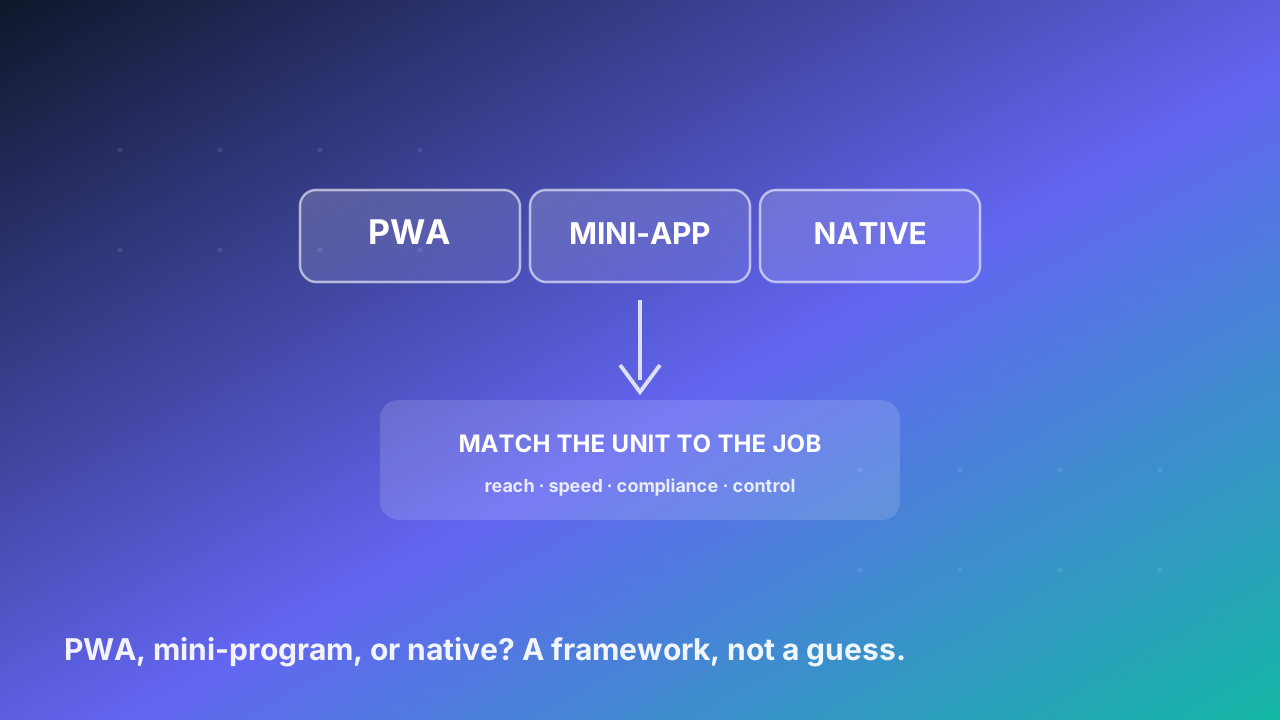
Stop guessing which app form to build. A practical 2026 framework maps your real constraints — reach, time-to-market, compliance, payment, control — to the right unit: PWA, native, or a governed mini-program.
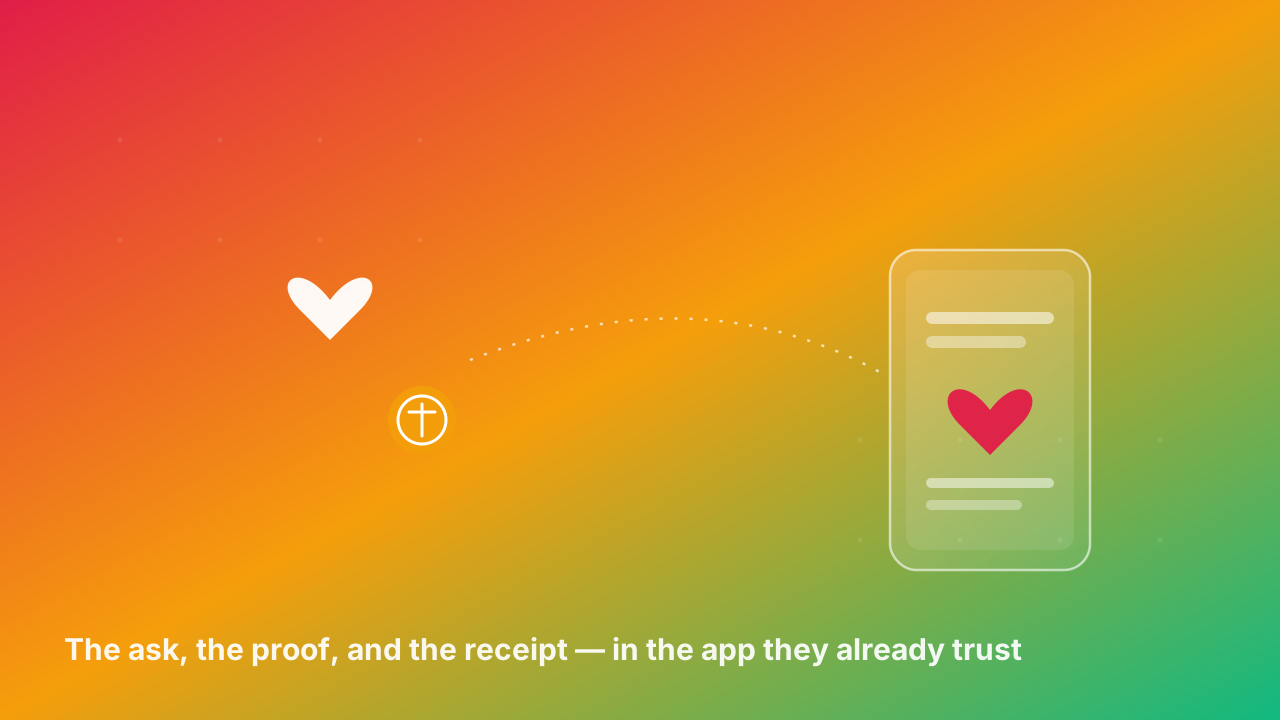
Generosity is a moment — a story, a disaster, a friend's fundraiser. The gift is won or lost inside the app the donor already trusts, and a governed mini-program delivers it with proof.
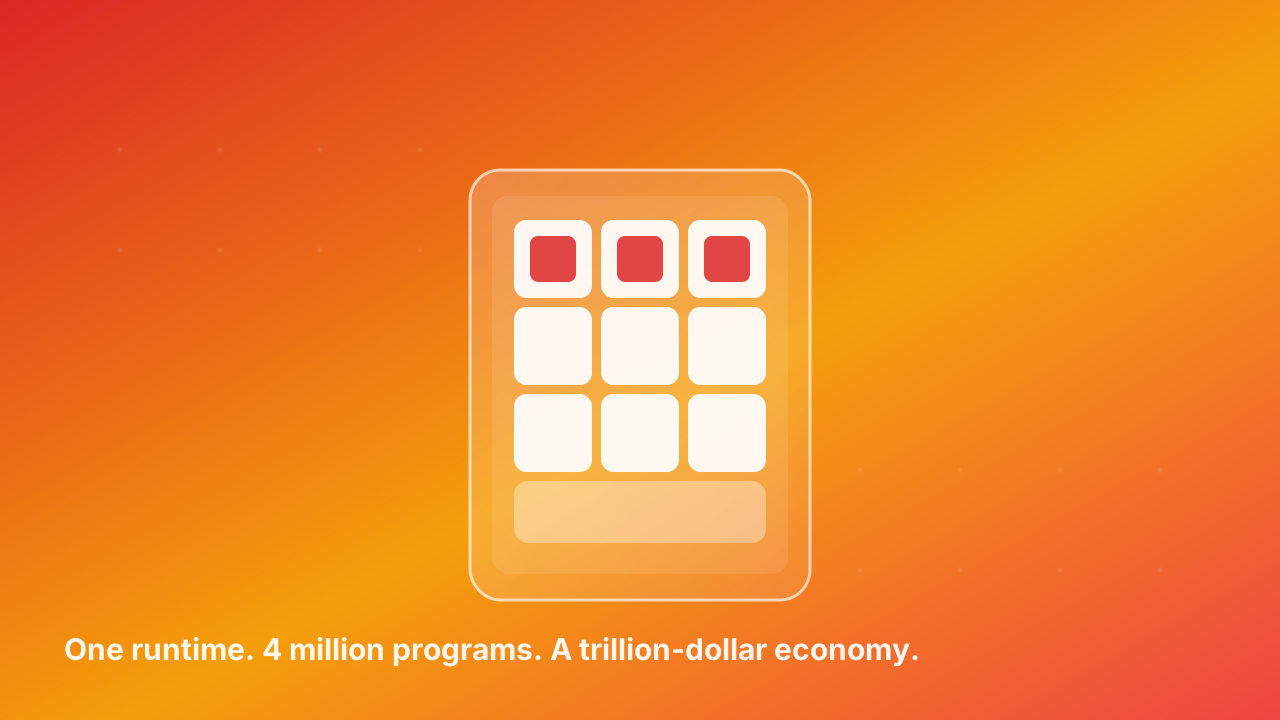
China didn't adopt mini-programs — it built an alternative internet on top of them. WeChat alone runs ~4.3 million programs with ~945M monthly users and over ¥8 trillion in 2024 GMV. Here's how the model works and why it scales.