Play Before You Download
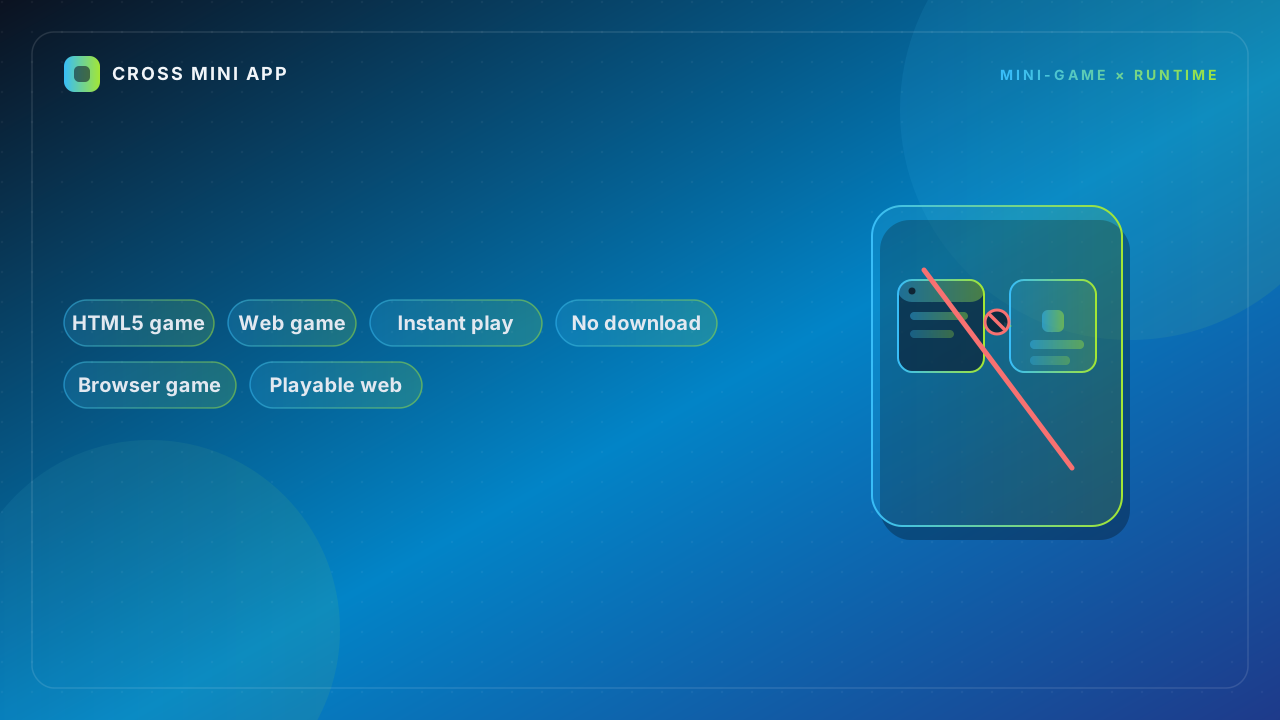
The single biggest drop-off in mobile games is the install button. People will watch a video, tap an ad, get curious, and then bounce the second they are asked for 200 megabytes and a permission prompt. HTML5 and instant-play titles delete that moment. You are playing before the thought of downloading even forms.
Q: Why does zero-install matter so much for reach?
Because intent is fragile. The gap between "that looks fun" and "I installed it" is where most players are lost, and every extra step is a leak. A web game that loads in a browser or inside a platform's instant format catches the player while the curiosity is hot. You trade a little performance for a massive drop in friction, and on mobile that trade usually wins. Reach is not about being everywhere. It is about being playable the instant someone is interested.
Q: What breaks HTML5 games that desktop web never had to worry about?
Phones. Smaller screens, touch instead of mouse, flaky networks, and batteries that punish heavy JavaScript. A game that runs fine on a laptop stutters on a three-year-old Android, and a 4-megabyte bundle that is nothing on wifi is a dead weight on a train. The runtime has to be lean, the assets compressed, and the first playable frame delivered fast. This is exactly where a tuned runtime earns its keep — the web gives you reach, but it does not give you forgiveness for bloat.
Q: How do you monetize a game someone never installed?
The same free-to-play levers, just lighter. Rewarded interactions, interstitials where they fit, and in-page purchases through a web payment flow. The trick is that instant players convert on impulse, not commitment, so the first fun has to be free and the first ask has to be tiny. Many studios use the web build as the demo and the native app as the destination — the no-install version is the top of a funnel that ends in a real install from someone already hooked.
Q: Is HTML5 a replacement for native, or a funnel into it?
For almost everyone, a funnel. The web build wins the first touch and the native app wins the long relationship. Trying to make HTML5 your only surface usually means fighting the platform on performance and payments at once. The smart play is to let the web do what it is best at — being instantly reachable — and let native do what it is best at — retaining and monetizing a committed player. Pretending one replaces the other just loses you one of those strengths.
| What the web gives you | What it quietly costs |
|---|---|
| Instant reach | Weaker performance headroom |
| No install wall | Lighter monetization tools |
| Fast first touch | You still want a native home |
| One build, many doors | Must stay lean to survive phones |
The install button is not going away. But the games that grow fastest are the ones smart enough to let players start before they ever see it.