The Game That Plays Itself
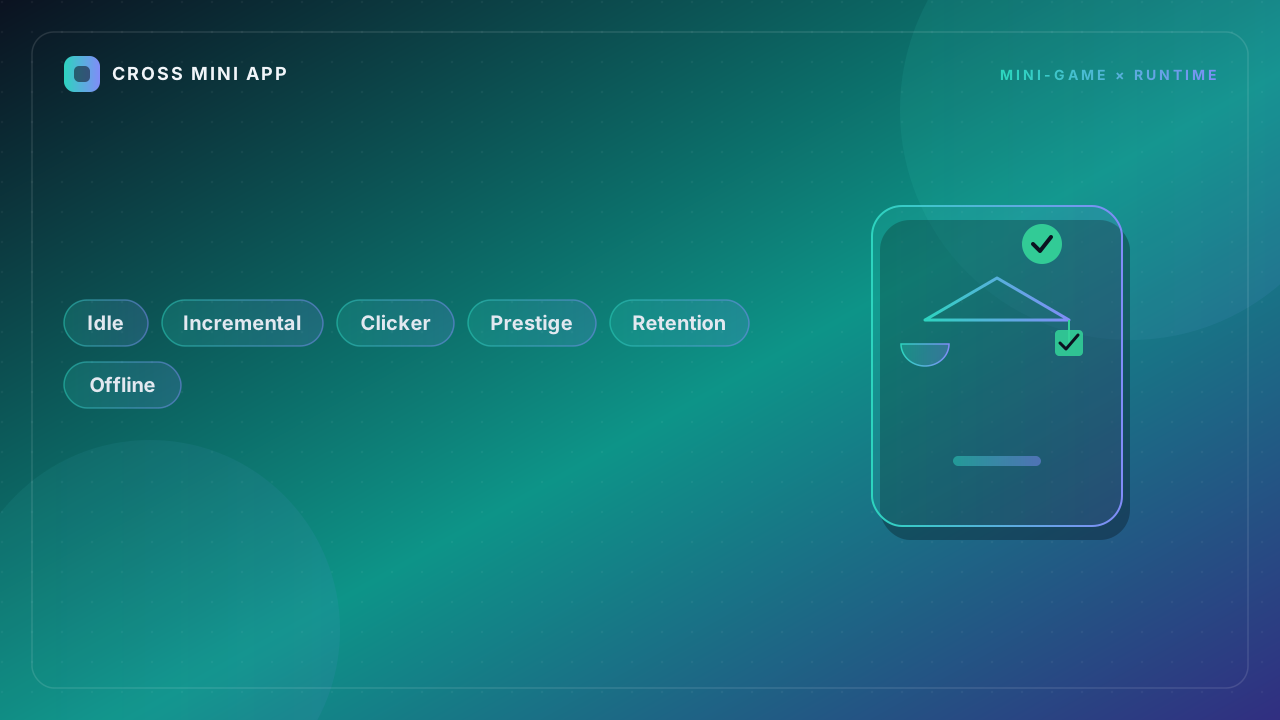
The flashiest games get the press, but the quiet earners are the ones where you close the app and the game keeps making progress anyway. Idle and incremental titles have topped revenue charts for years while looking like nothing. They are not a niche. They are a retention machine wearing a calculator.
Q: Why do idle games quietly out-earn the flashy ones?
Because they removed the thing that kills most games: the moment you stop playing, you stop progressing, so you feel you have to come back or lose. Idle games invert that. Close the app, and your factory, farm, or planet keeps producing. That always-on progress pulls players back without guilt or pressure, and the demographic is enormous — people who want a game that fits a busy life, not one that demands it. Lower intensity, longer life, broader base.
Q: What is the real monetization engine under the idle surface?
Offline earnings are the hook: you come back to a pile of coins, and the game gently shows you how a small purchase would have made that pile bigger. Then prestige — reset for a permanent multiplier — gives the long game a reason to keep going. Speedups and cosmetic skips are the impulse buys. None of it is aggressive. It is a slow, polite erosion of resistance, and it compounds because the numbers only go up.
Q: Where do idle games break — the balance trap?
Inflation. Once the numbers get so big that a trillion means nothing, progress stops feeling like progress, and the whole loop goes hollow. Prestige can delay this, but if every reset asks for more grinding than the last, players feel the treadmill and leave. The trap is that the easy fix — bigger numbers — is exactly what kills the feeling. The games that last tune the curve so gains always feel earned, not just larger.
Q: Is idle a genre, or a layer you can bolt onto anything?
Both, and that is its quiet power. Plenty of games that are not "idle games" borrow the meta: a restaurant sim, a battler, even a puzzle, will add an offline-earn layer to glue retention. The risk is dilution — bolt it on clumsily and you have a game that does neither job well. Done right, the idle layer is the retention glue; done wrong, it is the feature that makes the core feel pointless. Decide which game you are actually building.
| What looks simple | What is actually working |
|---|---|
| Nothing happens | Always-on offline progress |
| Big meaningless numbers | Prestige and earned curve |
| Passive play | Retention without pressure |
| One genre | A meta layer for any game |
Idle games are not lazy design. They are a different theory of fun — one where the game respects that your player has a life, and pays you back for remembering it.