Live Ops Is the Game After Launch
The launch gets the headlines. Live ops is what actually pays the rent. For a mini-game — where the loop is simple and the audience is casual — the difference between a game that spikes and dies and one that compounds is almost always the events you run after day one. Most teams under-build this because it feels like marketing, not product. It's product.
Q: What is live ops, and why does it matter more for mini-games?
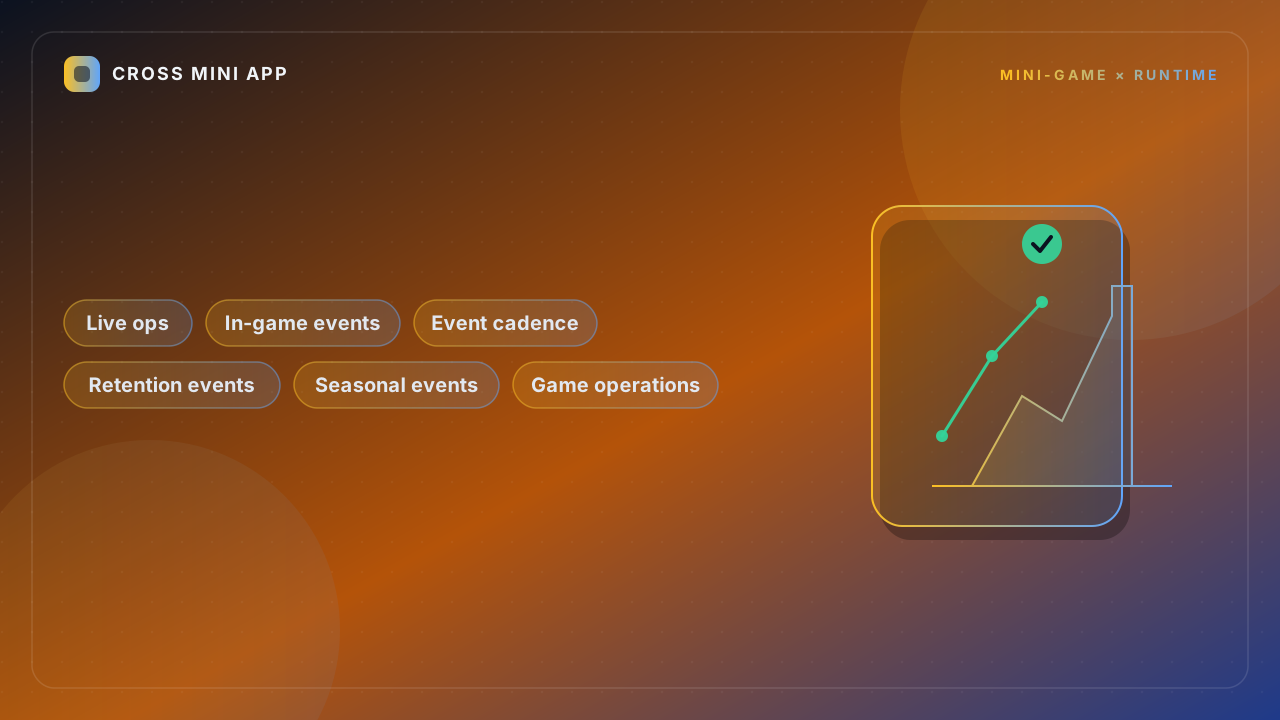
Live ops is everything you ship to the live game without a new build: events, timed rewards, leaderboards, rotating offers, seasonal skins. It matters more for mini-games because the core loop is thin by design — there isn't a 40-hour campaign to lose yourself in, so the reason to come back tomorrow is the thing you put in front of them today. A puzzle mini-game with a flat calendar loses to an identical one that runs a weekend tournament. The mechanic is a commodity; the cadence is the moat.
Q: What's a healthy event cadence?
Something every week, with one "big" moment a month. Weekly keeps the game in people's routines; the monthly tentpole gives them a reason to come back if they drifted. The failure modes are both directions: too sparse and players forget you exist, too dense and every event feels like noise and nobody cares. A clean pattern is a small recurring event (daily login bonus, weekly race) plus one themed event a month that changes the board enough to feel new. Cadence is a muscle — start modest, watch return rate, then push the ones that move it.
Q: How do I design rewards that don't inflate my economy?
Cap and gate. Cap the total reward a player can earn from an event so it can't dump unlimited currency into your sink, and gate the best rewards behind skill or time so whales don't vacuum them up in an hour and break your price anchors. The reward should feel generous in the moment but be a rounding error against your monthly economy. The teams that blow this up hand out premium currency like confetti during a launch event, then wonder why their store conversion craters for six weeks. Treat event rewards as marketing spend with a hard ceiling, not free money.
Q: How do I measure if live ops is actually working?
Don't measure event participation in isolation — measure what it does to the baseline. The real KPI is the lift in D7 and D30 retention and the bump in ARPPU during and after event windows versus the weeks without them. If an event drives a spike that fully decays the day it ends, it's a sugar high, not retention. The events worth keeping are the ones where the post-event baseline settles a point or two higher than before. That's compounding; everything else is just noise with a leaderboard.
| Live ops lever | What it actually moves |
|---|---|
| Weekly cadence | Keeps the game in daily routine |
| Monthly tentpole | Pulls back players who drifted |
| Capped, gated rewards | Protects your economy's price anchors |
| Post-event baseline lift | The only honest retention signal |
Live ops is the part of the job that never ends, and it's the part that decides whether your mini-game is a spike or a business. Build a calendar, cap the rewards, and judge every event by whether the baseline after it is higher than the baseline before. That's the whole game after launch.