Games Inside the Chat
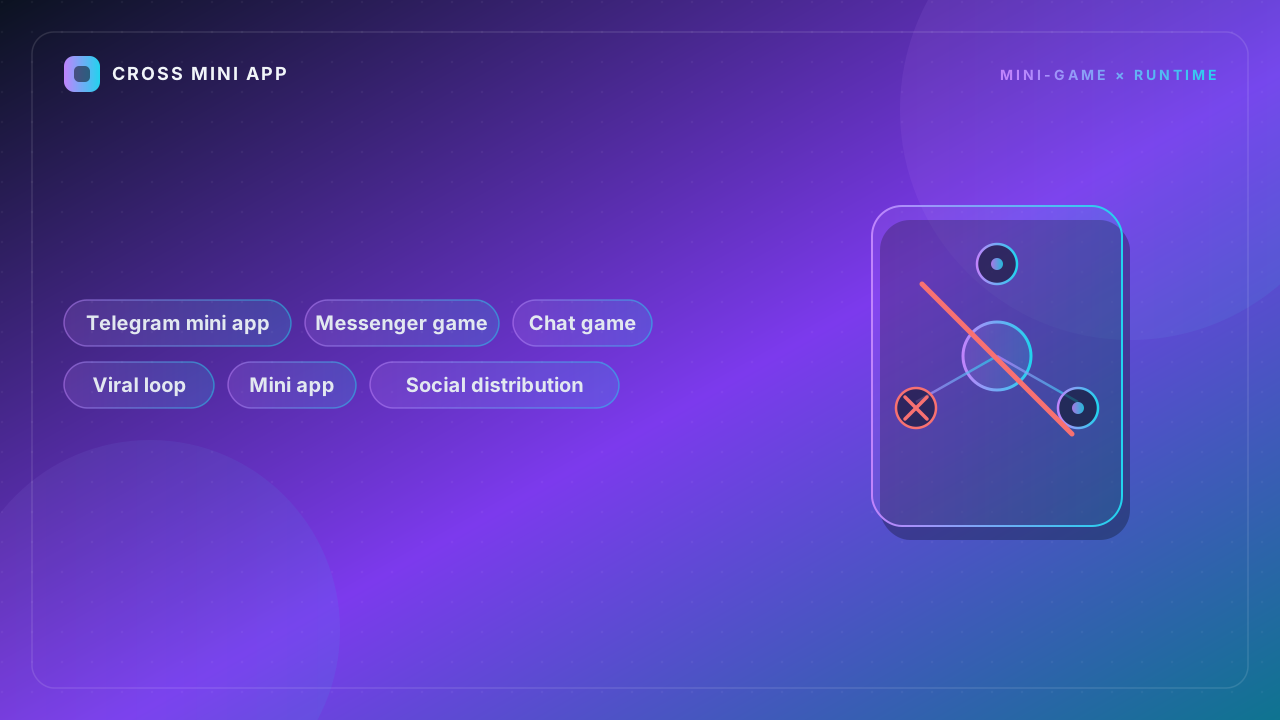
Notcoin and Hamster Kombat did not top charts because they were good games. They topped charts because they were already on the home screen of 30 million people who never opened an app store. The game lived inside Telegram, shared in the same thread you argue about weekend plans. That is not a distribution channel bolted onto a game. It is the game becoming the channel.
Q: Why are chat apps suddenly the hottest distribution channel for games?
Because the hardest problem in mobile is not building the game, it is getting someone to tap install. A messenger already has the user, their friends, and a notification that lands where they actually look. When the game is a tap inside a chat, the install wall disappears and the share button is the only growth engine you need. Telegram opened this with Mini Apps, and every platform with a social graph is now trying to copy it.
Q: What actually makes a game work inside a messenger rather than a standalone app?
Lightweight and social by default. The game has to open in under a second, need no permissions, and give players a reason to pull a friend into the same thread. Standalone games optimize for session length. Messenger games optimize for share velocity — a round that ends with "send this to your group" beats a round that ends with a rewarded video. If your core loop does not create a reason to mention it in chat, the platform will not save you.
Q: How do you monetize when there is no app store and no install?
Mostly the same free-to-play toolkit, just delivered differently. In-app purchases through the platform payment layer, rewarded interactions, and ads where the platform allows them. The clever part is that the viral loop lowers acquisition cost to near zero, so even thin margins work. Some titles monetize indirectly — build the audience inside the chat, then convert to a fuller native experience. The install wall you skipped becomes the thing you eventually sell through.
Q: What are the real risks — platform dependency, policy, and the novelty fade?
All three bite. You are building on rented land: a single policy change or a fee on mini-app payments can rewrite your economics overnight. The novelty of "a game in my chat" fades fast, and the audiences that came for the hype do not always stay for the gameplay. The teams that last treat the messenger as the top of a funnel, not the whole business. Own the player relationship somewhere you control, because the platform never will.
| What looks like a perk | What is actually the constraint |
|---|---|
| Free distribution | Rented audience, platform-set rules |
| Built-in sharing | Novelty that fades with the trend |
| No install friction | Harder to own the player |
| Viral by default | Gameplay still has to be worth sharing |
Messenger games are not a loophole around the app store. They are a reminder that distribution was never really about stores — it was about being where the conversation already is.