The Progression System Is the Real Game
A mini-game's core loop is what gets someone to stay for ten minutes. The progression system is what gets them to come back on day 30. Most teams pour everything into the loop and treat progression as an afterthought — a couple of levels and a "you won" screen. That is why their retention curve looks like a cliff.
Q: What is meta progression and why does it outlast the core loop?
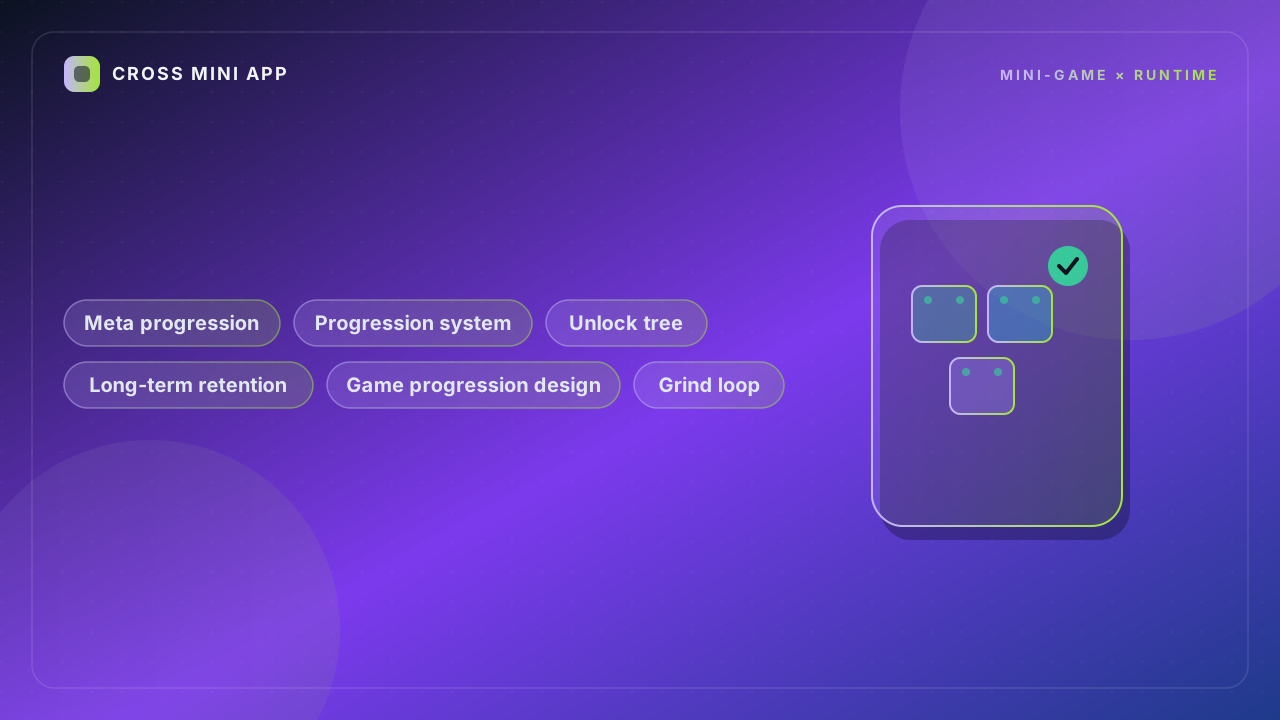
Meta progression is the long-loop layer sitting on top of the moment-to-moment gameplay — unlock trees, collection books, prestige layers, seasonal ranks, a base or roster you build across sessions. The core loop goes stale the moment the novelty wears off; the meta gives the next session a reason that the last one did not have. A player who has invested twenty sessions into a collection does not churn the way a player who only ever played the loop does.
Q: How do I build a progression system that retains without turning into a grind?
Two rules. First, make the next meaningful unlock always visible but never all at once — a roadmap, not a wall. Second, separate power progression from collection progression: let collectors feel they are getting somewhere without forcing pay-to-win power spikes that alienate the majority. The studios with the best D30 retention design the meta so that logging in tomorrow is a smaller step than logging in today felt, not a bigger one.
Q: Where does progression collide with monetization?
At the sink. Progression creates the demand (I want that unlock) and your economy creates the currency pressure (I am short). That is the healthy version. The unhealthy version gates core progression behind a paywall so hard that free players hit a wall at day 5 — that converts a few whales and bleeds everyone else. Keep the first progression arc completable free, and sell speed and cosmetics on top of it, not the arc itself.
Q: How do I keep a progression system alive after launch?
Treat it as content, not config. A static unlock tree is dead in a month. Ship new branches, new collection sets, and new prestige layers on a cadence your players can predict, and retire old ones gracefully so the screen does not turn into a graveyard. The meta that retains is the one that keeps promising next month's reason to return, not the one that peaked at launch.
| What a retaining meta does | What a churn-meta does |
|---|---|
| Next unlock always visible, paced | Everything unlocks at once or never |
| Power and collection separated | Pay-to-win wall at day 5 |
| First arc free, sell speed on top | Core arc gated behind paywall |
| New branches on a cadence | Static tree, dead in a month |
The core loop gets the download. The progression system gets the relationship. Build the meta like it is the product, because for a mini-game that plans to be around in a quarter, it is.