The Battle Pass Is the Only Subscription Players Thank You For
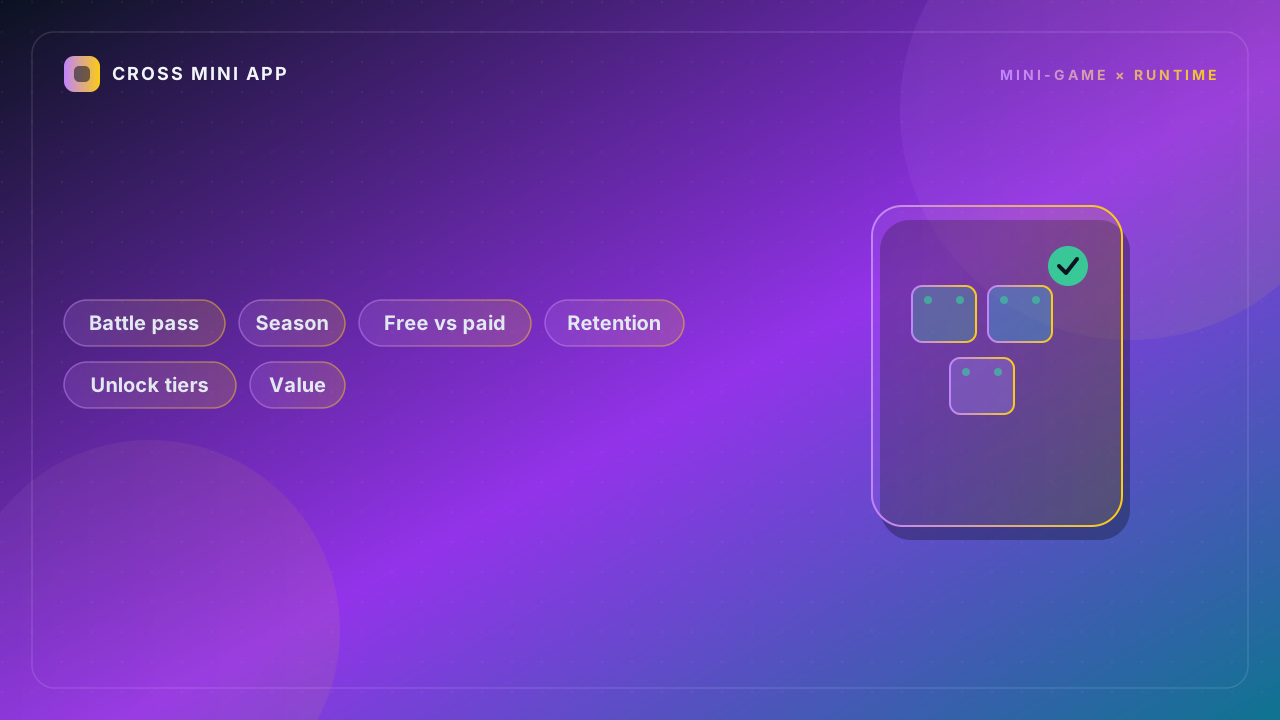
Most subscriptions sell access you already had and then took away. A battle pass sells progress that only exists because you played, and that difference is why players thank you for it instead of resenting it. The pass is a retention engine dressed as a store. Get the pacing wrong and you have built an obligation players learn to skip. Get it right and the season becomes the reason they open the game on days they would have quit.
Q: Why does a battle pass work where a plain subscription gets resented?
Because the value is earned, not rented. A normal subscription asks you to keep paying to keep what you already had. A pass hands you a track of rewards that fills up as you play, and the premium tier just widens the track. Players feel they are buying momentum, not access. The second reason is visible progress: every session moves a bar, and a moving bar is the cheapest dopamine in games. The trap is when the premium tier gates content players were told was theirs — then the pass stops feeling like a reward and starts feeling like a toll. Keep the free track honest and the paid track a genuine upgrade, and the resentment never shows up.
Q: How do you split the free and paid tracks without humiliating free players?
The free track should feel like a real game, not a teaser. If free players only ever see grayed-out locks, you have built a billboard, not a reward path, and billboards get ignored. Give the free track meaningful, attainable rewards at a slower pace, and let the paid track add depth on top — extra tiers, a faster lane, cosmetics that do not affect power. The line that works: free players finish the season with something they are glad they got; paid players finish with something they are glad they paid for. When free players feel the pass respects them, they are the ones who convert next season, not the ones who churn.
Q: What unlock cadence actually keeps players through the whole season?
Daily rewards create a habit but burn out fast; weekly and milestone rewards create goals worth returning for. The passes that retain best mix the two: a light daily trickle to keep the bar moving, plus chunkier weekly and event milestones that give the season shape. The failure mode is front-loading. If all the good stuff sits in the first ten levels, players hit a wall at week three and the last month is dead air. Pace the value so the best rewards sit near the end for engaged players, with enough mid-season peaks to survive the slump. A season is a marathon with checkpoints, not a sprint with a cliff.
Q: How do you measure whether a pass drove retention, not just extra revenue from existing payers?
Hold a control group that did not get the pass, or compare seasons before and after. The metric that proves retention is day-30 active rate among pass buyers versus matched non-buyers, not total pass revenue. A pass can post record sales and still be failing if buyers churn at the same rate as everyone else — you simply took their money once. What you want to see is buyers staying longer and coming back more often during the season window. If pass revenue is up but buyer retention is flat, you sold a product; if both are up, you built a habit. The second one is the only one that compounds.
| Lever | What it does | Cost if misused |
|---|---|---|
| Free track pace | Keeps free players in the loop | Too slow and they ignore it |
| Paid track depth | Converts and rewards the committed | Too strong and it feels like a toll |
| Daily trickle | Builds a low-cost habit | Too thin and it burns out |
| Weekly / milestone | Gives the season shape | Front-loaded and the end dies |
| End-game reward | Pulls engaged players to the finish | Missing and the slump kills week three |
A pass is a habit you pay for. Make the habit real and the payment follows.