
The RM95,000 app that 180 people opened
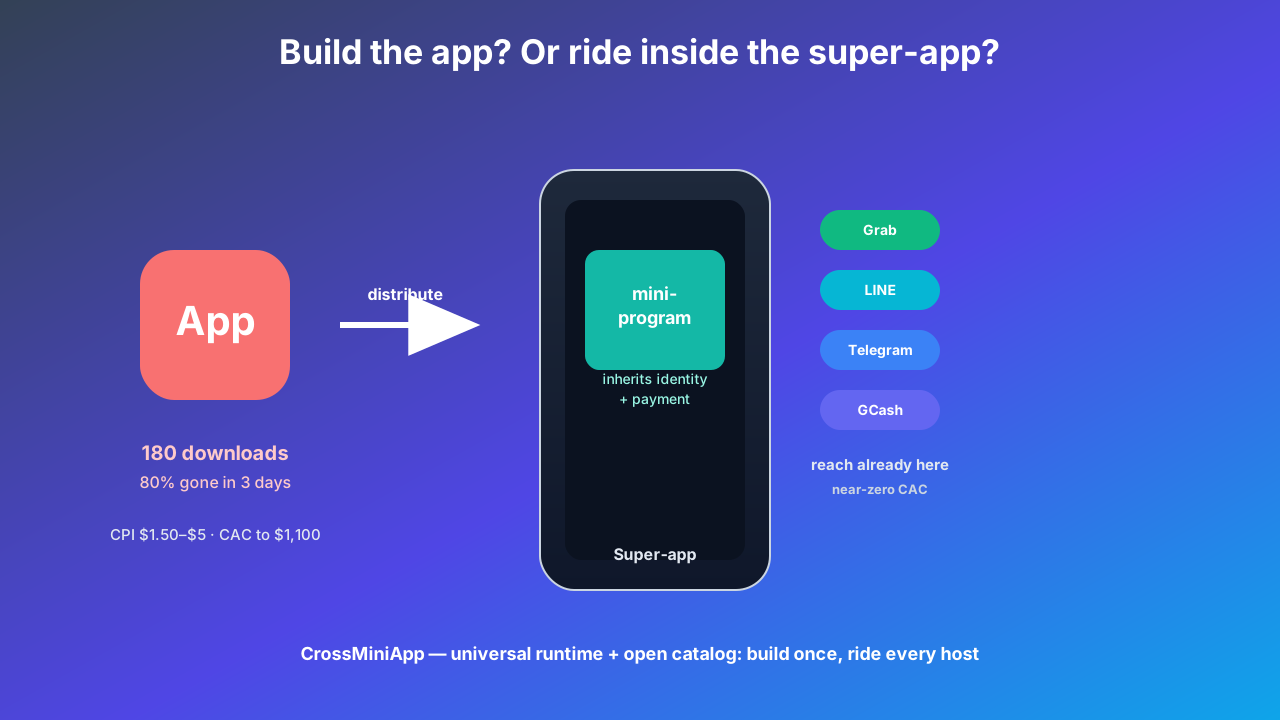
A restaurateur in Kuala Lumpur wanted a loyalty app. He paid an agency about RM95,000 — call it US$20,000 — to build a standalone ordering and rewards app. Six months later it had been downloaded 180 times. The loyal customers he already had? They were chatting in WhatsApp groups and paying with GCash. They never opened his app.
He did not have a product problem. He had a distribution problem: he asked people to install yet another icon on a home screen they barely look at, to do something they were already doing elsewhere for free.
That story repeats across Southeast Asia a thousand times a week.
The arithmetic of a dead download
Buying a user is expensive and getting worse. Non-gaming cost-per-install hit about US$2.80 in early 2026 — up roughly 25% year over year — and across categories CPI now runs US$1.50 to US$5 a pop. For consumer finance, paid acquisition can reach US$1,100 per customer. Then most of them leave: about 80% of apps are uninstalled within three days, and the typical app holds just 26% of users on day one, 13% by day seven, and 7% by day thirty. Roughly three quarters of mobile projects miss their own goals.
Read that again as a business: you pay real money to put an icon on a phone, and within a month nine out of ten people have thrown it away. If your service is used a few times a year, that math never closes.
The distribution power already moved
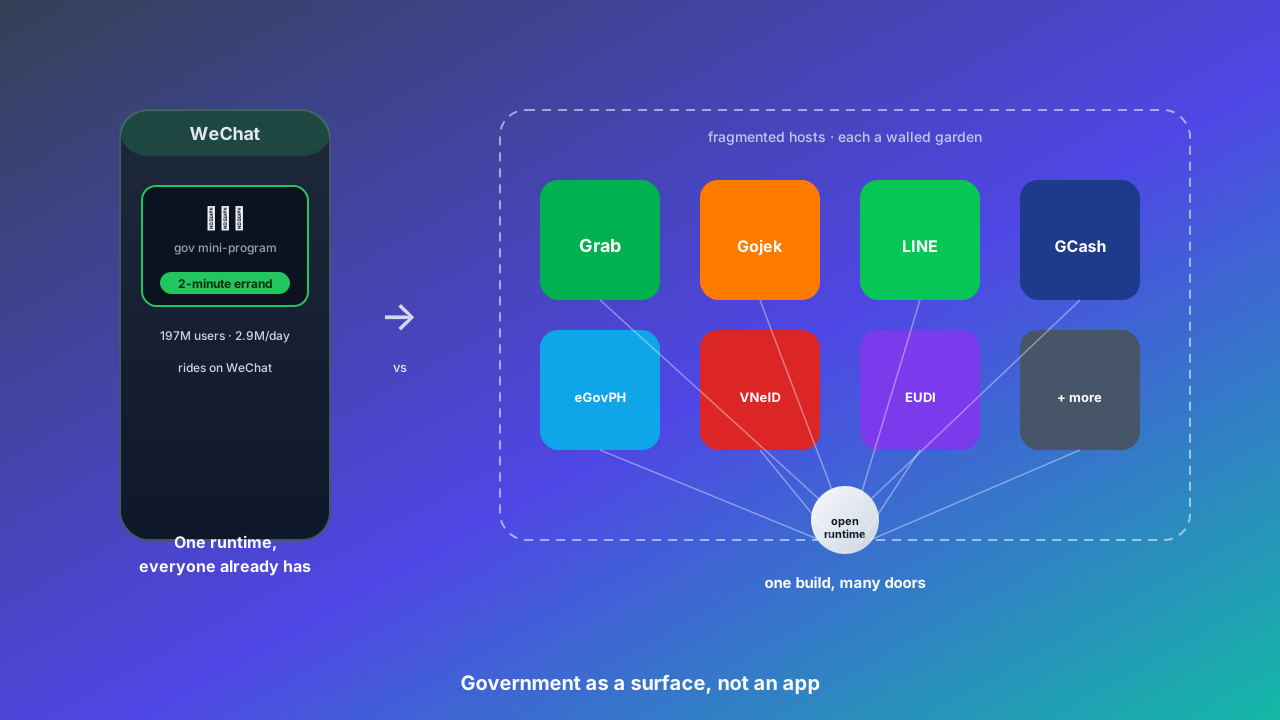
The attention is not up for grabs. It lives inside a handful of super-apps.
Grab serves about 129 million annual users across eight countries. LINE reaches more than 200 million, owning 93% of Japan and roughly 80% of Thailand and Taiwan. Telegram passes 950 million. GCash sits at nearly 100 million — about 70% of Filipino adults. Sensor Tower's 2026 read is blunt: the top ten super-apps take more than 40% of all mobile time in the region.
And here is the number that ends the argument. GXBank, a Malaysian digital bank, drew 90% of its customers through Grab and ran acquisition costs close to zero. The users were already there. The bank just rode inside the host.
Which apps should become mini-programs
Not everything. But a surprising amount of what teams ship as standalone apps would work better as a mini-program parked inside a super-app — inheriting the host's identity, payment, and crowd.
| Service type | Fit | Why it works as a mini-program | Best host |
|---|---|---|---|
| Low-frequency / on-demand (booking, home services) | High | Used a couple of times a year; you can never amortize acquisition | Grab / Gojek / LINE |
| Vertical or niche commerce | High | Cannot outspend Shopee or Lazada on ads | Grab / GCash / Telegram |
| SME membership, ordering, booking | High | The customers already live in LINE, GCash, WhatsApp | LINE / GCash / Telegram |
| Financial micro-services (micro-loans, insurance quotes, savings) | High | Inherit host KYC + payment; near-zero CAC, GXBank proved it | Grab / GCash / Gojek |
| Community, tools, shareable mini-games | High | Host sharing beats paid installs | Telegram / LINE |
What should stay native
Three things earn their own app. If the app is the company — the core product fans open every day. If you need deep device access most hosts won't expose — Bluetooth peripherals, AR, heavy offline sync. If you sit on proprietary data that is the whole moat. Everyone else is paying rent on a home-screen slot they do not need.
The CrossMiniApp angle
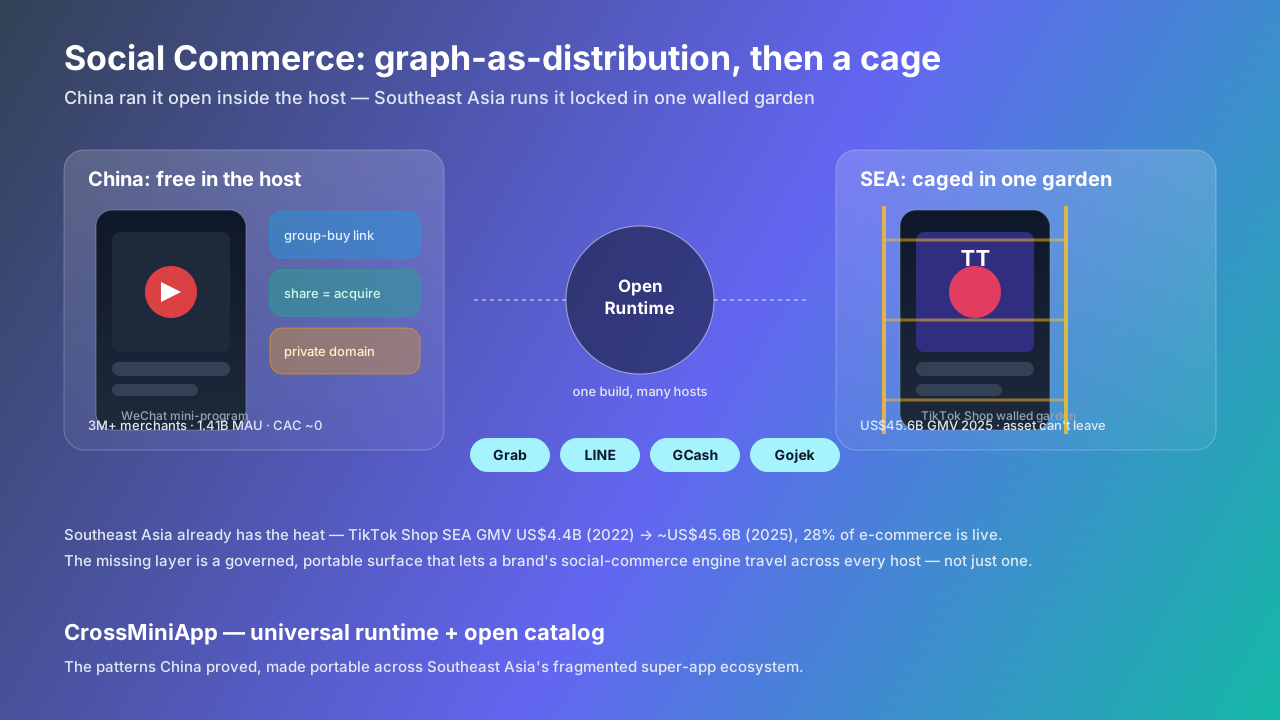
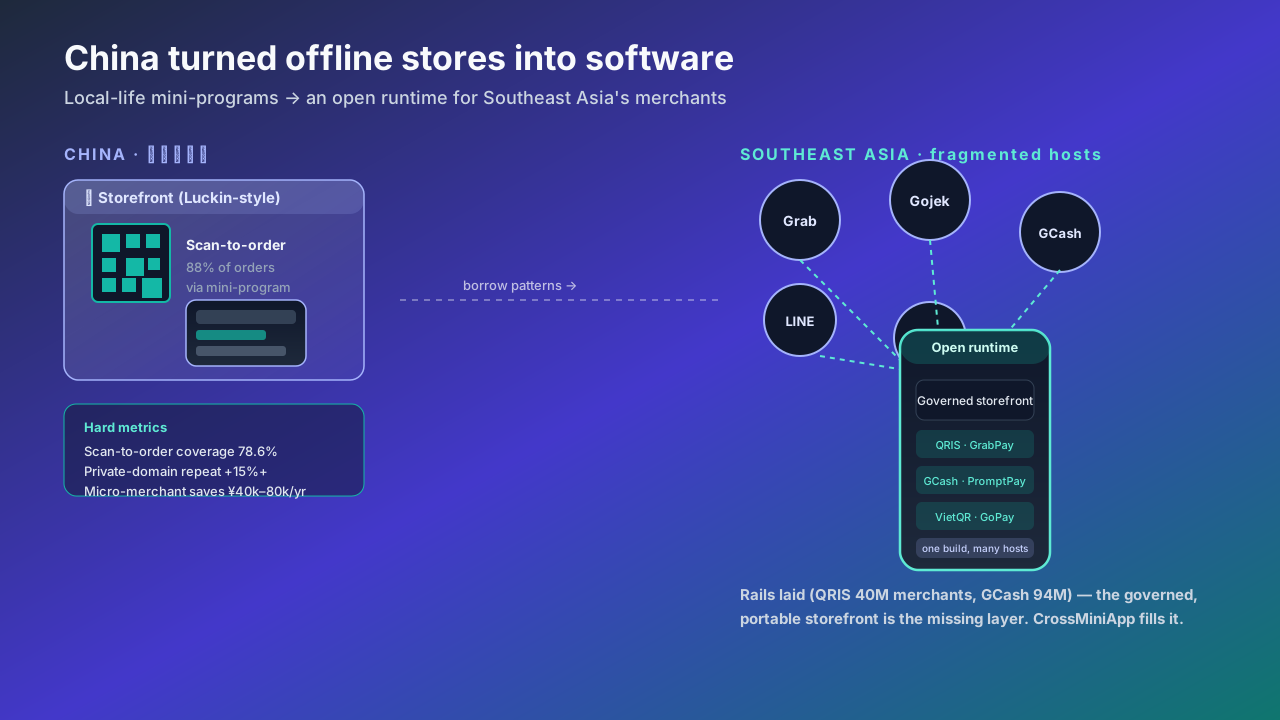
CrossMiniApp is a universal runtime plus an open catalog. You build the mini-program once and it runs inside Grab, Gojek, LINE, GCash, and Telegram — inheriting each host's identity and payment, sandboxed and governable, updatable over the air. It is not another wall. It is the doorway into the walls that already have the people.
The rule
If your app's only job is to reach users who already live inside some super-app, stop building the app. Build the mini-program that rides along inside the host.