
The store was never the point — the graph was
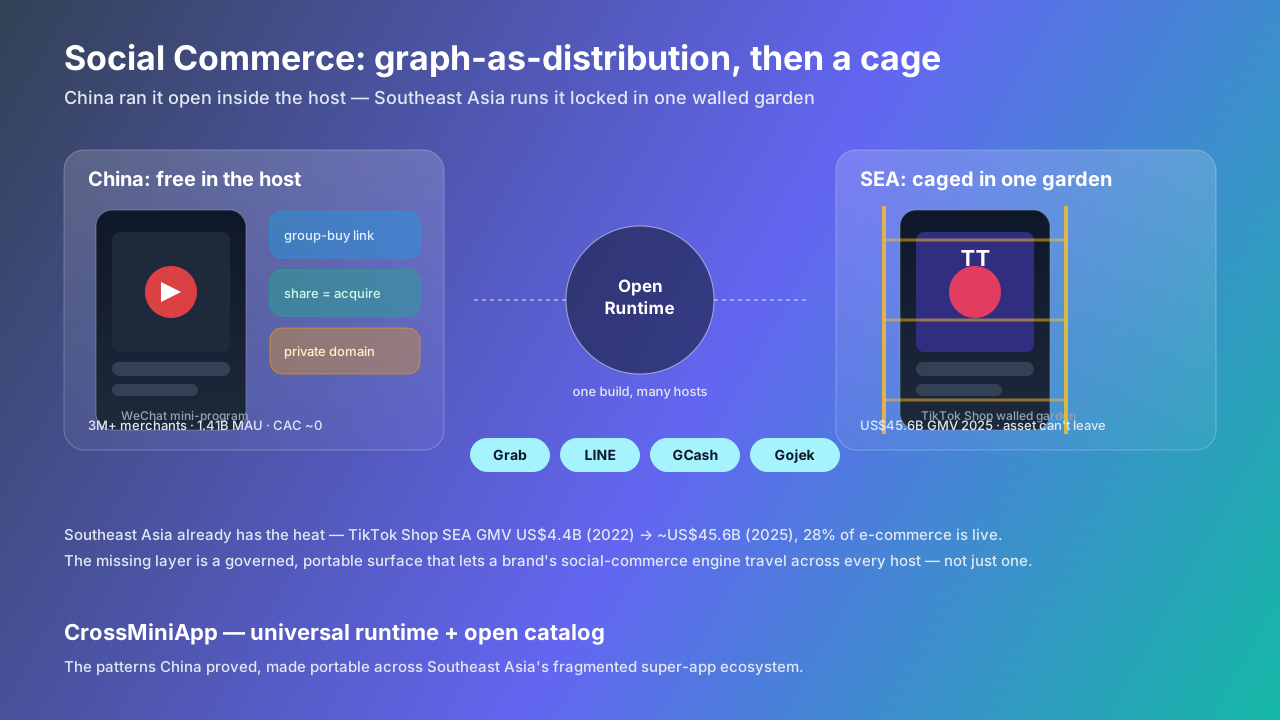
China didn't build social commerce by forcing people into yet another shopping app. It built it inside the host they already lived in. In 2024 WeChat Store (微信小店) reached ¥220–250 billion GMV, up 92% year over year, with a 2025 target of ¥600 billion. WeChat Channels (视频号) livestream commerce grew nearly 3× in 2024, with payment-settled GMV climbing from roughly ¥10 billion in 2021 to over ¥300 billion in 2024 and toward ¥600 billion in 2025. More than 3 million merchants run commerce through mini-programs, on top of WeChat's 1.411 billion MAU and WeCom's 75 million connected users. The infrastructure is the social graph itself.
Three plays that turned the graph into a storefront
Not every brand won. The ones that did share a shape.
| Play | Standout | Hard metric | Pattern that won |
|---|---|---|---|
| Social fission as acquisition | Pinduoduo | Mini-program gained 100M users in under 6 months; ~10M DAU by Singles' Day 2017; 155M mini-program MAU by Sep 2020 (No.1 in mobile shopping); group-buy orders >60% of total volume (2024); WeChat mini-program drove 35% of new-user traffic (2023); MAU 195M (2018) → 487M (2020); gamification lifted repeat rate +40% | Friend's share = the acquisition channel; CAC near zero |
| Content + livestream + in-host checkout | WeChat Channels / WeChat Store | Livestream commerce ~3× growth in 2024; Tuike affiliate scale >20M in 2025 activating 1.4B private-domain users; send-a-gift-in-chat = social-is-transaction | Live traffic closes inside the host, not a跳转 |
| Private-domain repeat loop | Brand mini-program + WeCom + livestream | WeChat Store GMV 1.92× and orders 2.25× vs 2023; brand sales growth 4.3× the platform average | Repeat purchases stay in the host graph, not re-acquired each time |
One row carries hard citable numbers (Pinduoduo); the livestream and private-domain rows are described at the pattern level because platforms report blended figures, not per-mini-program GMV — but the mechanism is identical and equally instructive.
China's secret: it was never the app
Strip away the Chinese context and the real engine is a four-part stack inside a trusted host:
- The social graph is the distribution. A group-buy link in a family chat is discovery, trust signal, and checkout in one. Pinduoduo's earliest cohorts had near-zero CAC because users were the acquisition channel.
- Private domain is the asset. Every order, follow, and repeat is owned by the merchant inside the host — not rented from an ad auction.
- Livestream + in-host checkout closes the loop. Traffic from live video converts inside the mini-program, reusing the host wallet. No跳转, no cold start.
- Platform governance is the safety. Programs update in days and can be taken down at the platform level — something regulators and users both trust.
That combination is why a farming-game sapling or a ¥9.9 group buy could reach hundreds of millions without a single app-install campaign.
Southeast Asia: the heat is real, the cage is the problem
The region already proved the demand. TikTok Shop's Southeast Asia GMV went from US$4.4B (2022) to ~US$22.6B (2024) to ~US$45.6B (2025) per Momentum Works, with market share rising from 4.4% to 17.6%. In 2025 the regional livestream industry hit US$32B (+41.7%), 480M users at 68% penetration, and live commerce reached 28% of e-commerce GMV — US$89B. TikTok alone has 450M MAU in Southeast Asia. Indonesia's QRIS already connects 56M+ users, 93% of them micro and small businesses.
But the surface is caged. Creators and brands build their social-commerce engine inside TikTok Shop's walled garden and cannot carry that private-domain asset to Shopee, Lazada, Grab, or Gojek. Fragmentation repeats the storefront N times. And the trust gap is now regulatory: Vietnam's Law No. 122/2025/QH15, effective 1 July 2026, makes sellers, livestreamers, and platform operators explicitly accountable — exactly the governance a governed, revocable in-host surface provides.
What Southeast Asia can actually borrow
- Borrow Pinduoduo's graph-as-distribution — let brands fission-acquire inside the host relationship graph instead of rebuilding an app.
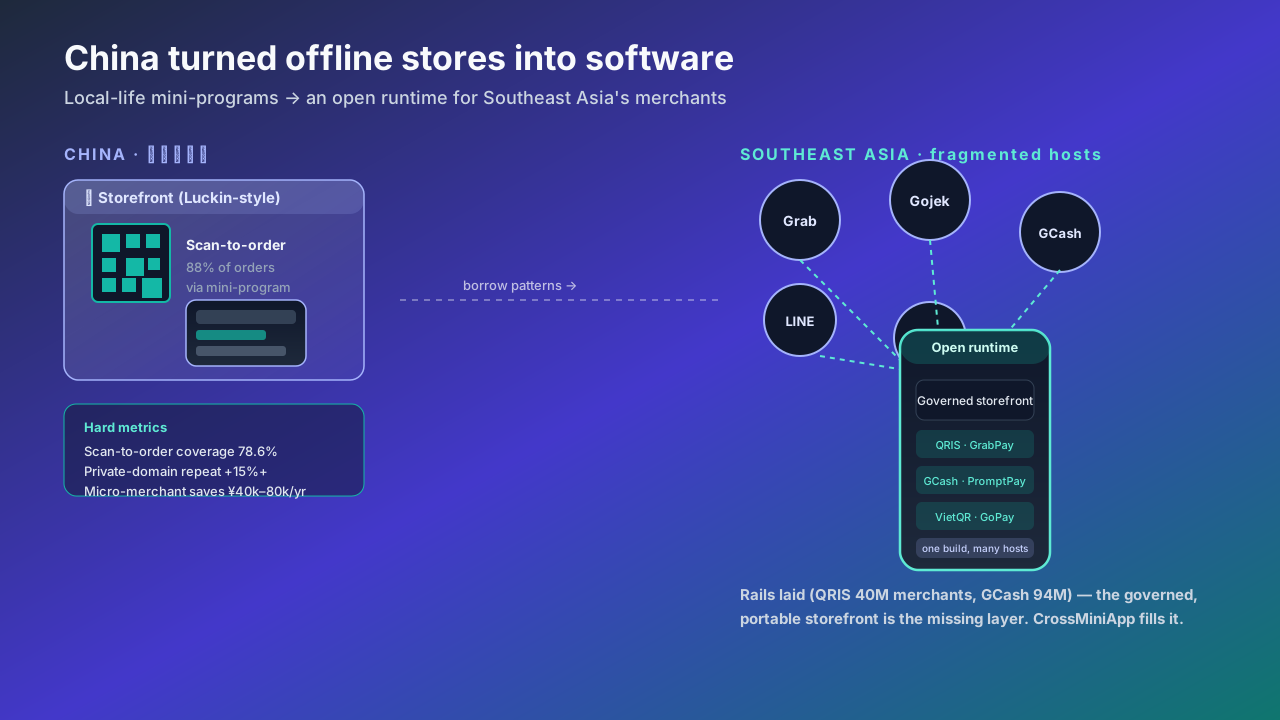
- Borrow the private-domain loop — keep fans and repeats inside the host wallet/graph (GrabPay, GCash) rather than cold-starting every platform.
- Borrow livestream + in-host checkout — live traffic closes inside a mini-program that reuses QRIS / GCash, not a跳转 out.
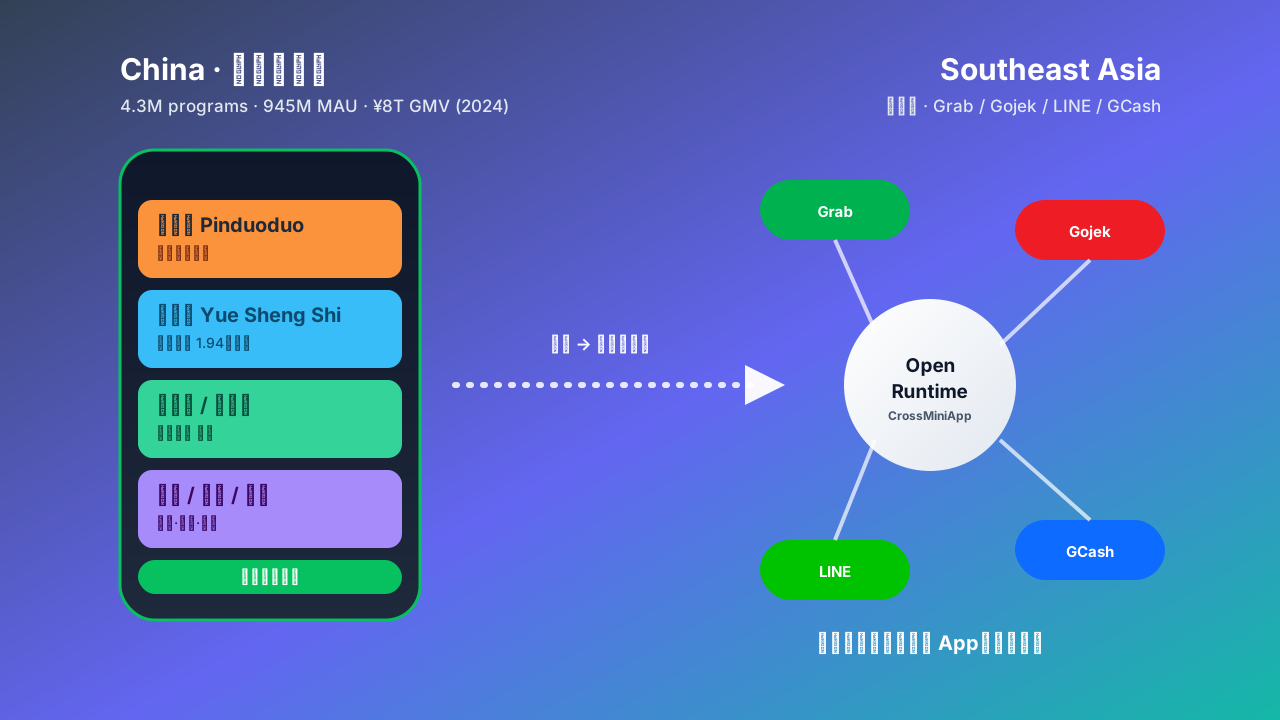
- Break TikTok Shop's wall with an open runtime — one social-commerce surface distributed into Grab, LINE, Gojek, and GCash at once.
- Treat governance as trust — a governed, auditable, revocable surface is the compliance feature, not the tax (and it pre-empts Vietnam's new law).
Where CrossMiniApp fits
CrossMiniApp is the universal runtime plus the open catalog. It does what TikTok Shop's garden does not: it lets a governed, host-resident social-commerce surface — group-buy, affiliate fission, livestream checkout, private-domain membership — travel across many hosts, not just one. China's social-commerce casebook shows the patterns that win; the open runtime makes them portable across Southeast Asia's fragmented ecosystem — one build, many super-apps, no wall.
Sources
- LongPort — Tencent's e-commerce system: WeChat Store 2024 GMV ¥220–250B (+92%), 2025 target ¥600B
- Three Piergang Report — 2025 WeChat Channels business model (livestream GMV 2021→2025, affiliate scale)
- SMU City Perspectives — Pinduoduo: social fission, group-buy, WeChat mini-program growth
- Momentum Works — Ecommerce in Southeast Asia 2026 (TikTok Shop SEA GMV 2022→2025, market share)
- Economic Daily — Southeast Asia digital economy 2025 (>US$300B), Indonesia QRIS 56M+ users, 93% MSMEs