
The rails are built. The surface is missing.
In 2026 stablecoins stopped being a crypto curiosity and became payment infrastructure. The U.S. GENIUS Act (Public Law 119-27, enacted July 18, 2025) created a federal framework for payment stablecoins — 1:1 reserves, monthly disclosure, AML obligations — and the European Union's MiCA regime reached full application across member states by mid-2026. With the two largest western jurisdictions now regulating rather than banning, the money layer finally has the compliance cover it never had.
The numbers show a rail that is already carrying real volume. Citi Treasury Services estimated $2.4 trillion in B2B stablecoin settlement in 2025 and expects it to roughly double in 2026. On adjusted, real-economy volume, stablecoins now run $5–7 trillion annualised — comparable to the SWIFT cross-border system. In Latin America, 71% of firms already use stablecoins for cross-border payments, and retail stablecoin transfers under $10,000 grew 78% year over year. Total stablecoin supply sat near $310 billion in mid-2026.
Money that moves, and a screen that can't show it
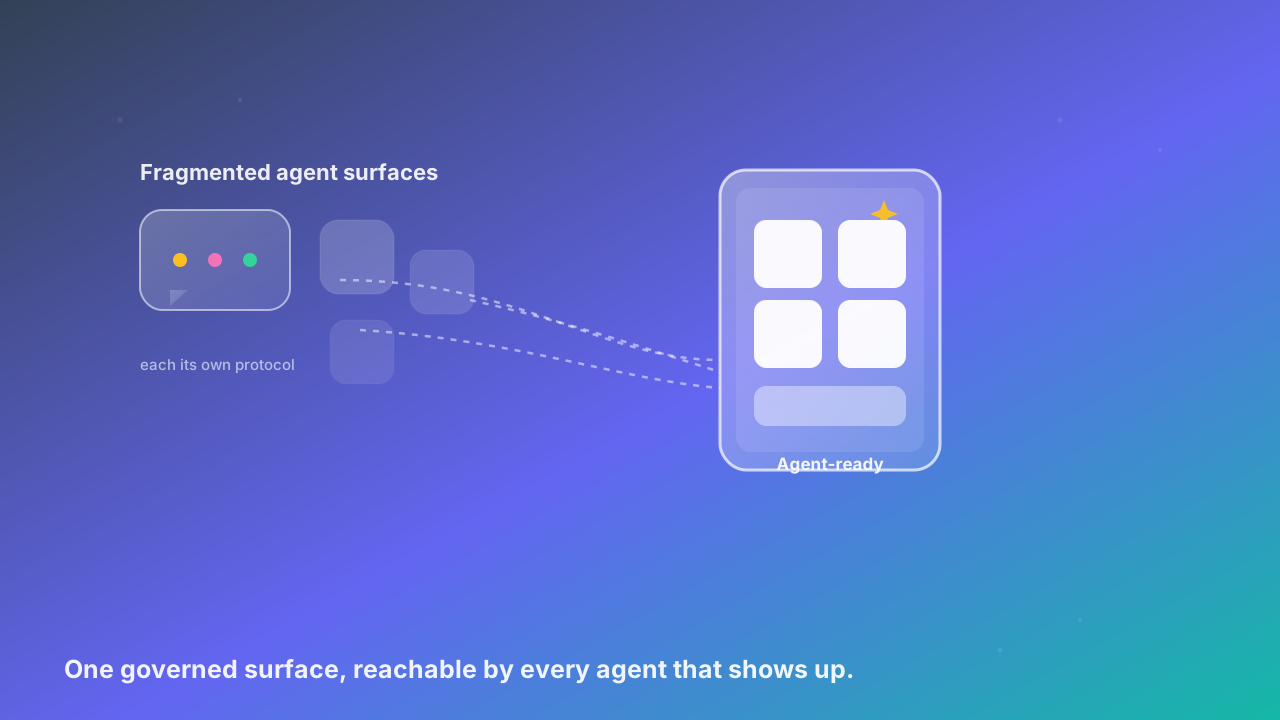
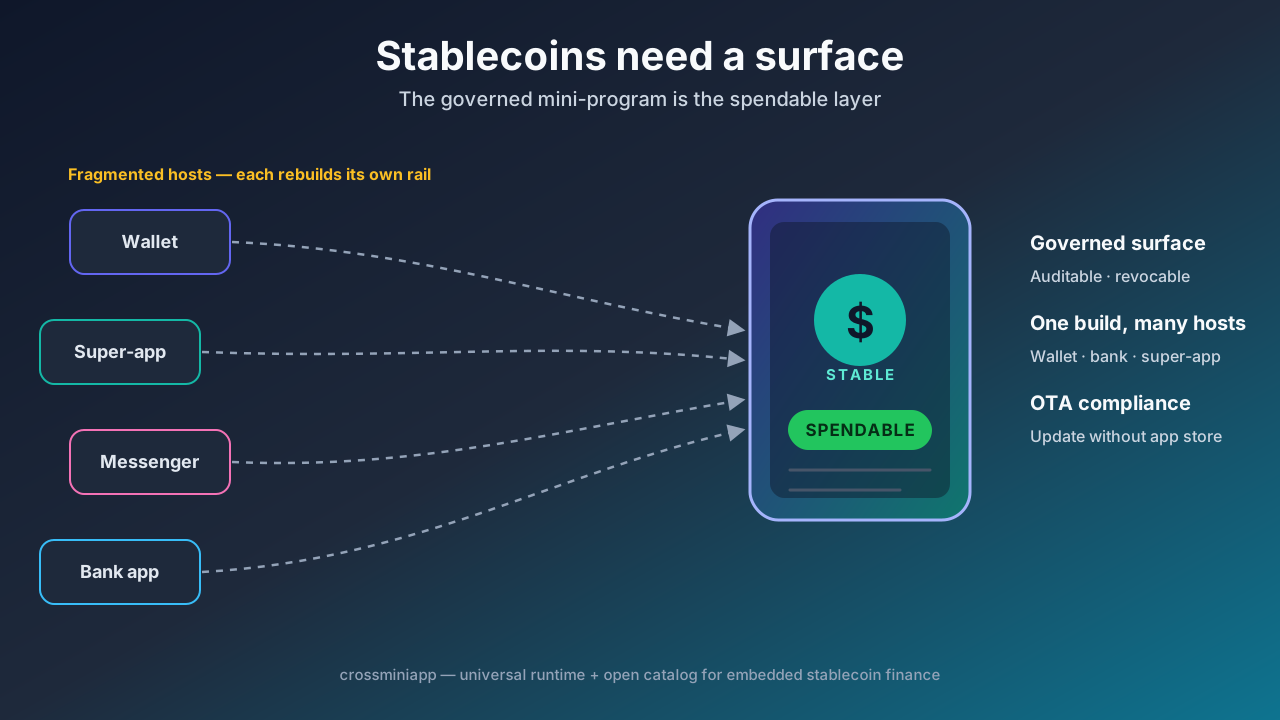
Here is the gap the headlines miss. The rail exists, but the spendable surface does not. In the markets where stablecoins matter most — LatAm, Africa, Southeast Asia — financial life happens inside a constellation of super-apps, wallets, messengers, and banking apps, not one WeChat. Every one of those hosts would need its own native checkout, its own KYC bridge, and its own compliance and audit trail. That is an N×M rebuild: every stablecoin use case, rewired for every host, in every market.
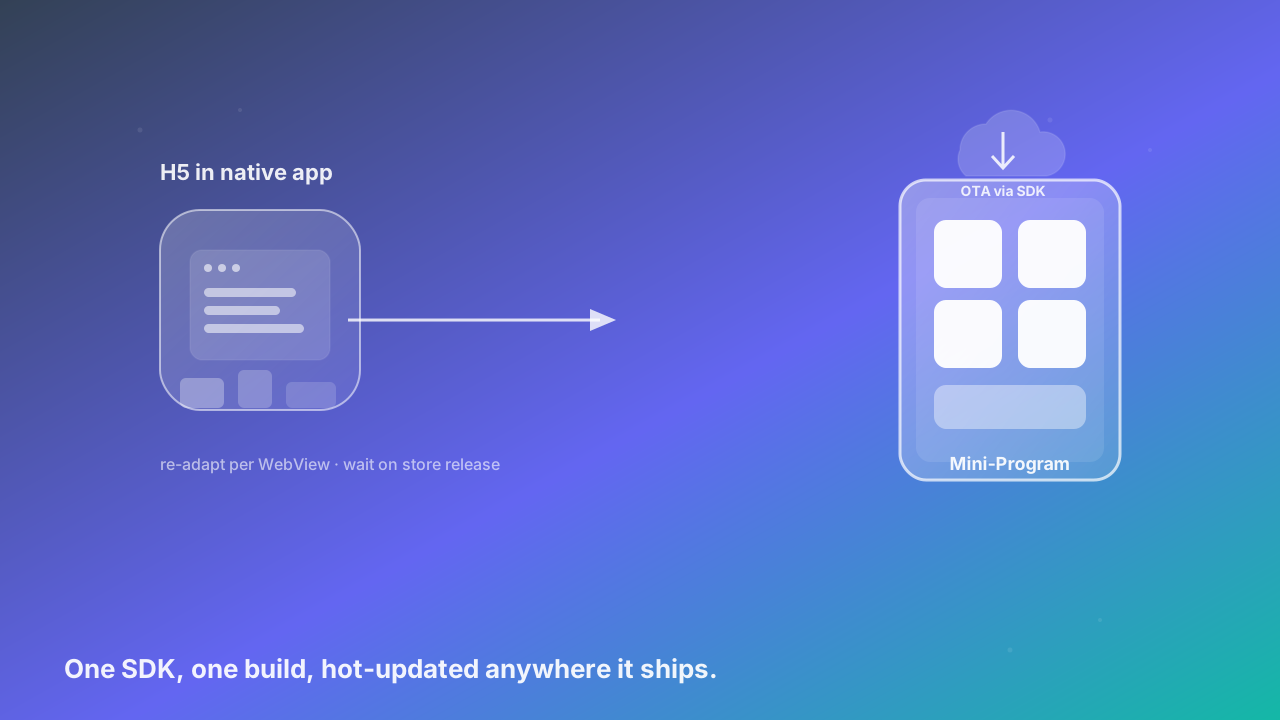
A bare H5 checkout page is the weak alternative. It can be dropped into a browser, but on mobile it inherits no host identity, no device-level trust, and no native payment bridge — and it fails the very compliance bar the new regulations just raised. A standalone app, meanwhile, is a silo the host never surfaces and the user never opens for a five-second payment.
Regulation legitimised the rail — and raised the bar for the surface
GENIUS and MiCA did not just permit stablecoins; they imposed custody, reserve, redemption, and AML duties on issuers and the service providers that touch them. That is good news for users and a hardening constraint for anyone building the front end. The surface that moves stablecoins now has to be governed, auditable, and revocable — exactly the properties a vetted mini-program runtime provides, and exactly what a hand-rolled H5 page does not.
This is the part crossminiapp is built for. Our thesis has always been "universal runtime + open catalog": take the China-validated model where a governed mini-program is the unit of a financial or service surface, and make it portable to the fragmented overseas ecosystem. Stablecoins are the proof case.
What the surface needs to do
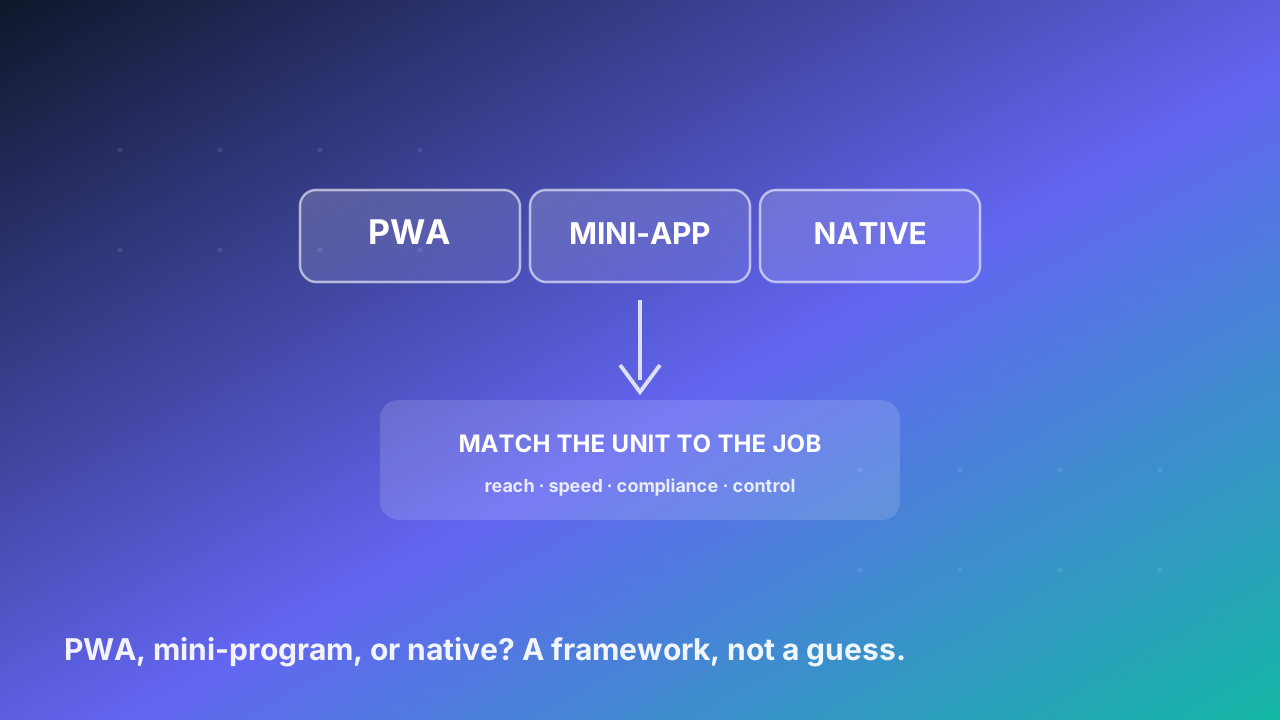
A surface that can safely move regulated stablecoins for a host needs four things a raw web page cannot provide:
- Inherited identity and KYC. The mini-program receives verified identity from the host instead of re-onboarding the user. In markets where onboarding drop-off is the real cost, this is the difference between a payment and an abandonment.
- A native capability bridge. Biometric auth, secure element, and NFC tap-to-pay are brokered through reviewed SDK endpoints, so the program spends with the host's trust rather than around it.
- One build, many hosts. A governed mini-program is written once against a standard API surface, then embedded into any wallet, bank app, or super-app that integrates the runtime — no per-host native rebuild.
- OTA compliance updates. When a regulator changes a disclosure or a travel-rule requirement, the surface's logic updates over the air through the SDK. No app-store release for the service layer.
Side-by-side
| Dimension | Bare H5 checkout | Native app checkout | CrossMiniApp SDK mini-program |
|---|---|---|---|
| Compliance posture | Unaudited, self-built | Repeated per app | Governed, audited, revocable |
| Host adaptation cost | Rewire per host | Rebuild per platform | One build, many hosts |
| Identity reuse | Re-onboard user | Own silo | Inherited from host |
| Compliance update | Redeploy site | App-store release | OTA via SDK |
| Cross-host reuse | Rewire per host | Per platform | Shared runtime + catalog |
| Auditability / takedown | None | Brand-only | Platform-level, revocable |
Where it pays off first
The pattern fits the surfaces already riding host trust and instant rails: cross-border remittance and payout, where a user in Manila or São Paulo receives or sends stablecoin value through the host wallet they already trust; embedded retail checkout, where a merchant accepts stablecoin without building a native terminal; and government disbursement, where a governed program is the only compliant way to deliver subsidies or benefits inside a citizen's everyday app. In each, the cost of rewiring per host is paid over and over; the runtime pays it once.
Where CrossMiniApp fits
CrossMiniApp is the universal runtime plus the open catalog, delivered through one SDK. As stablecoins become the regulated rail for cross-border and embedded finance, the service that wins is the one any host can embed, govern, and update — built once, inheriting host identity and payment, and pushed over the air. For teams watching stablecoins go mainstream in fragmented overseas markets, the mini-program is the missing layer that finally makes the rail spendable.