
East Africa did not wait for banks. From Nairobi to Kigali, a bloc of more than 300 million people leapt straight to mobile money — M-PESA, Airtel Money, MoMo — and never looked back. That single fact is why this region is some of the richest soil on earth for a mini-program ecosystem.
The opportunity is not one national app. It is one lightweight program that rides the region's mobile-money rails across borders, inside the wallets East Africans already trust. Where each country has its own closed host, a universal runtime is the only thing that can stitch the bloc together.
The six dimensions, scored on East African ground
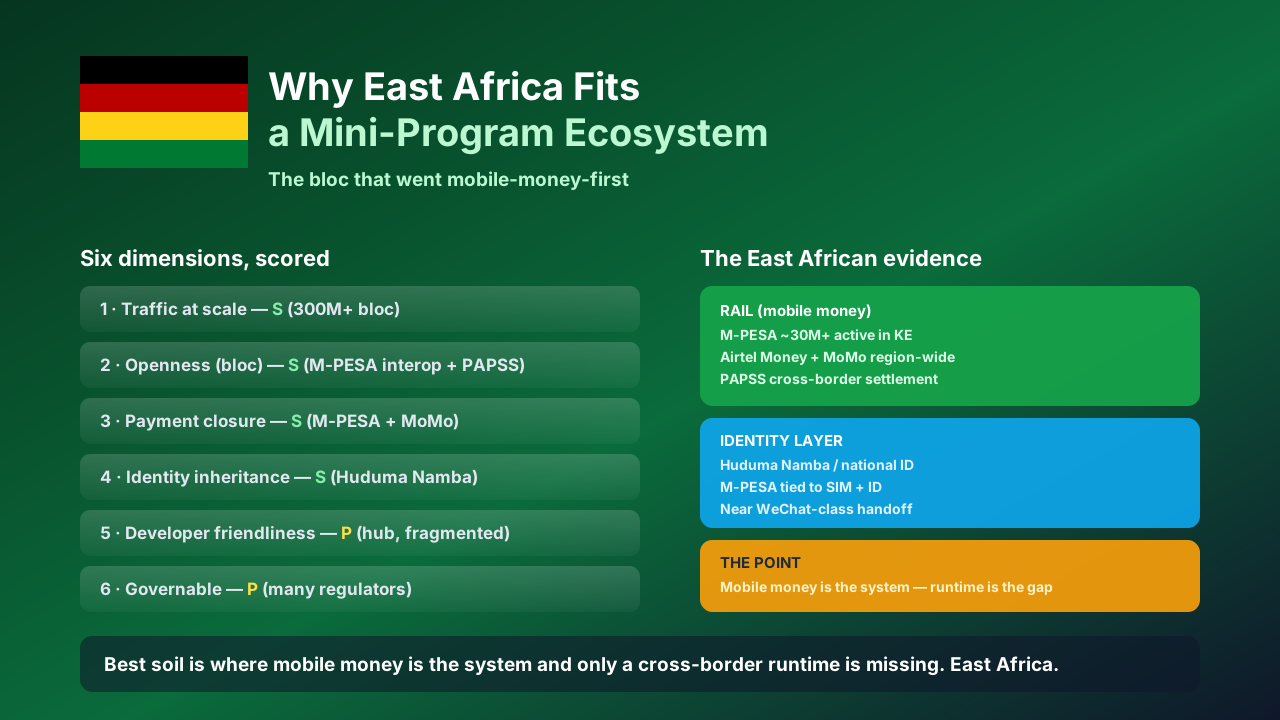
1. Traffic at scale. The East African Community plus the Horn spans 300M+ people — Kenya, Tanzania, Uganda, Rwanda, Burundi, South Sudan and beyond — overwhelmingly young and mobile-first. A bloc this size is a single attention market.
2. Openness, at the bloc level. Mobile money is the rail, and it is increasingly interoperable: CBK-mandated M-PESA interop in Kenya, Tanzania–Kenya cross-border remittances, and PAPSS (the Pan-African Payment and Settlement System) enabling instant local-currency settlement between central banks. Open across borders, not just within them.
3. Payment closure. A mini-program inherits mobile money directly — M-PESA alone reaches ~30M+ active users in Kenya, with agents on every corner; Airtel Money and MoMo blanket Tanzania, Rwanda and Uganda. Real-time, cash-light settlement is already the default.
4. Identity inheritance. Mobile number is identity. Huduma Namba and the national ID in Kenya, SIM registration across the bloc, and M-PESA tied to SIM + ID give a near WeChat-class handoff without a new login wall.
5. Developer friendliness. Nairobi's "Silicon Savannah" is a real engineering hub, but the region is fragmented: Android-heavy, lower smartphone penetration in places, and a patchwork of national frameworks. The need is precisely a lightweight, cross-border runtime — not another native app.
6. Governable. This is the moderate link. The bloc has many regulators (CBK, BOT, BNR) and EAC harmonization is real but uneven; cross-border data rules are still maturing. Governable, not yet a single rulebook.
| Dimension | Score | East African evidence |
|---|---|---|
| Traffic | S | 300M+ bloc, young, mobile-first |
| Openness | S | M-PESA interop + PAPSS |
| Payment | S | M-PESA ~30M+, MoMo, Airtel Money |
| Identity | S | Huduma Namba, SIM + ID |
| Developer ease | P | Nairobi hub, fragmented frameworks |
| Governance | P | Many regulators, EAC uneven |
Why "the bloc that went mobile-money-first" is the point
East Africa is the only large region on earth where mobile money is not a feature — it is the financial system. Cross-border settlement (PAPSS) and intra-bloc remittances (Somali diaspora flows, Tanzania–Kenya transfers) already move over phones. The missing piece is a runtime that spans the closed national hosts. That is exactly the gap a universal mini-program layer fills.
The CrossMiniApp angle
CrossMiniApp is a universal runtime plus an open catalog. You build the mini-program once and it runs inside M-PESA, Airtel Money and MoMo surfaces across the bloc — inheriting each host's identity and payment, sandboxed and governable, updatable over the air. East Africa's mobile-money-first structure is the argument: the rails are regional, the users are reachable, and the value is in a runtime that crosses borders without a native-app wall.
The rule
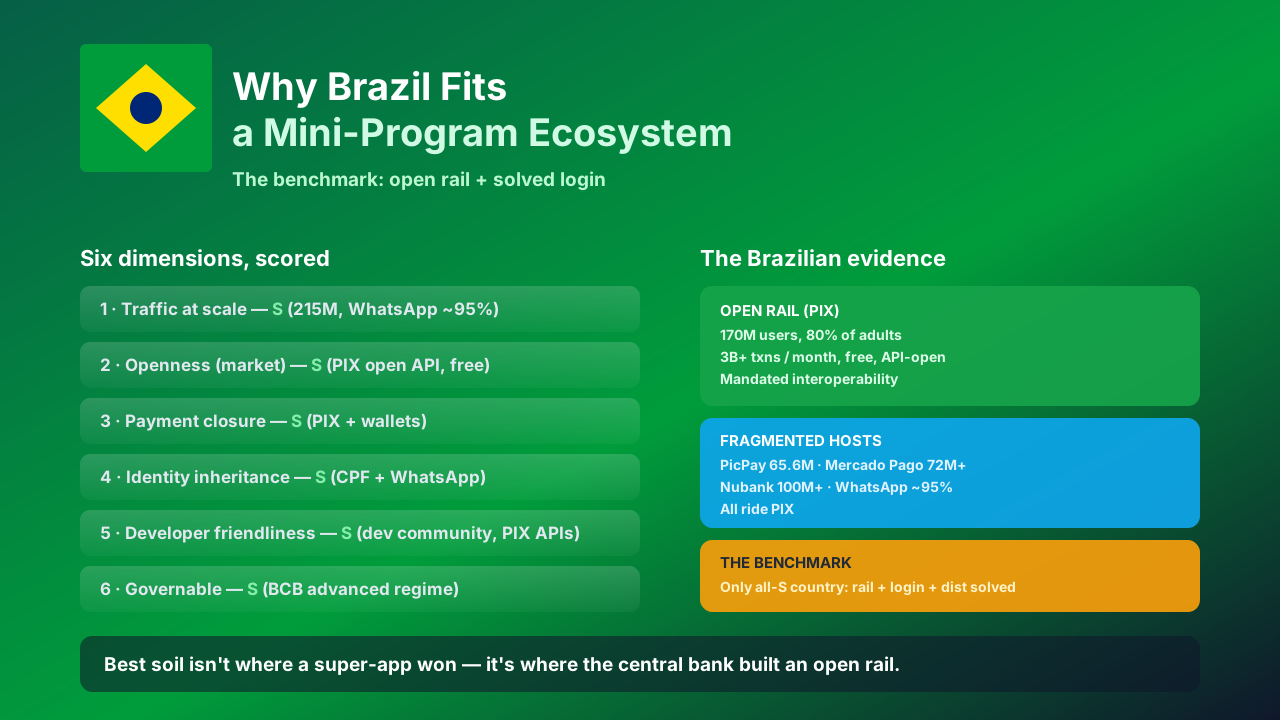
The best soil is where mobile money is already the financial system and the only thing missing is a runtime that crosses borders. East Africa is that soil.