
Reach users at the moment that matters — not in an app store
Financial institutions rarely lack users. What they lack is frequency of reach at the right moment. A customer wants to split a payment when they swipe; they think about investing when payroll lands; they consider insurance before a trip. Cross Mini App puts those services directly inside partner apps, converting in the most natural context instead of waiting to be downloaded.
For a bank or insurer, the hard part was never the product — it was extending that product beyond your own walls without blowing up your compliance posture.
Compliance inherited from the runtime
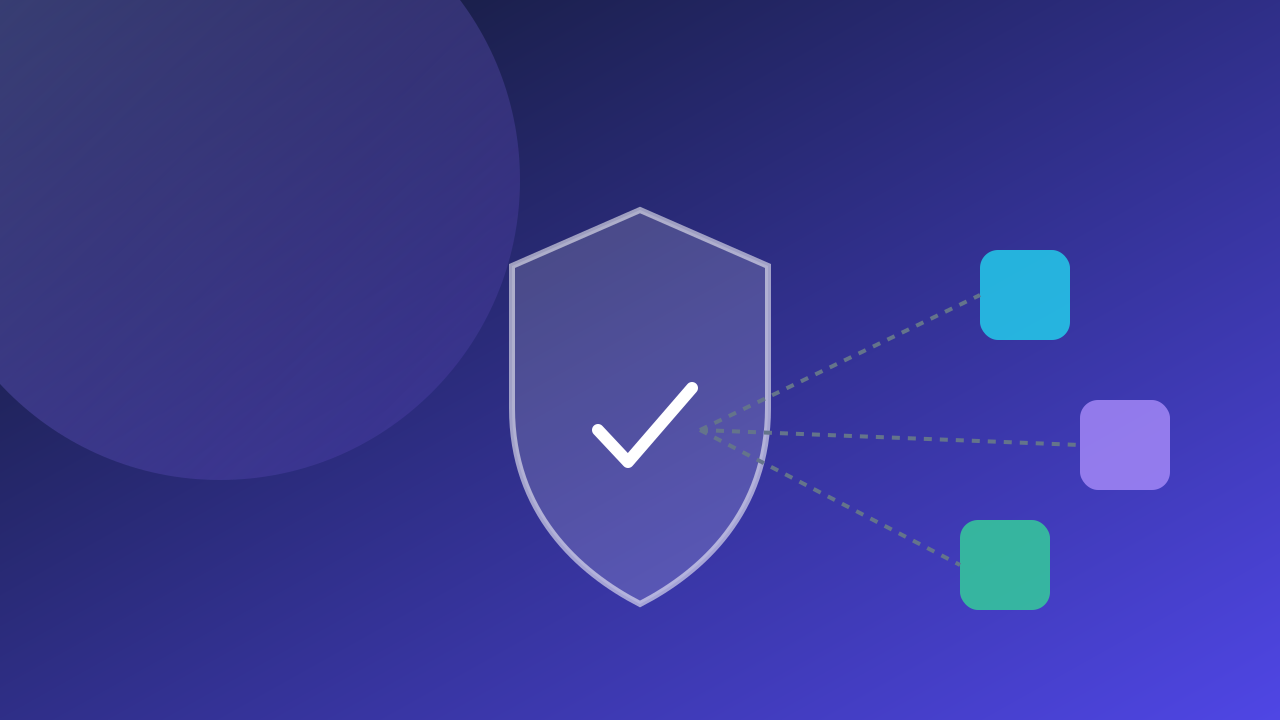
Building on the Cross Mini App runtime means your financial mini-program inherits sandbox security and data isolation by default:
- Independent memory per program
- Isolated storage — no leaking user data across tenants
- Converged permissions — least privilege by construction
- Auditable operations — every action traced
That's financial-grade isolation without building your own security layer from scratch.
Where the services land
Your mini-programs appear in the places high-trust, high-value users already are:
- Banking apps — the service hall
- Payment tools — the lifestyle section
- Wealth platforms — the product marketplace
You're not buying cold traffic. You're meeting users who already trust the host app with their money.
Observable end to end
Because every mini-program runs inside a sandboxed container, you can see the full chain: who called which API, read what data, triggered what transaction — all traceable. Security incidents move from "we'll investigate" to "contained in minutes."
Why institutions choose this path
- Service boundary expands — lending, wealth, and insurance enter real usage scenes through one deployment, reaching the whole network.
- Engagement rises — embedding finance inside high-frequency moments (spending, transferring, repaying) shortens the path and lifts activity naturally.
- Compliance cost stays controlled — the sandbox isolates sensitive data by default and pairs it with full-chain audit, compressing the cost of a self-built security system.
Scenarios that fit
- Digital wallets — balance wealth management, contextual payments
- Consumer credit — installment at checkout, bill installment
- Investment & wealth — funds, insurance distribution
- Insurance — travel cover, screen protection, instant claims
Cross-app mini-program distribution lets financial services show up where decisions actually happen — safely, observably, and without rebuilding compliance each time.