

The Global Mini-App Map: Who's Building a Super-App Outside China
Mini-programs are no longer a China-only story. Telegram, LINE, Grab, Gojek, and Kakao have built real mini-app platforms across Asia, Latin America, and beyond. Here is the global map and what it means for distributors.
Cross Mini App Team
September 19, 2026 · 3 min read
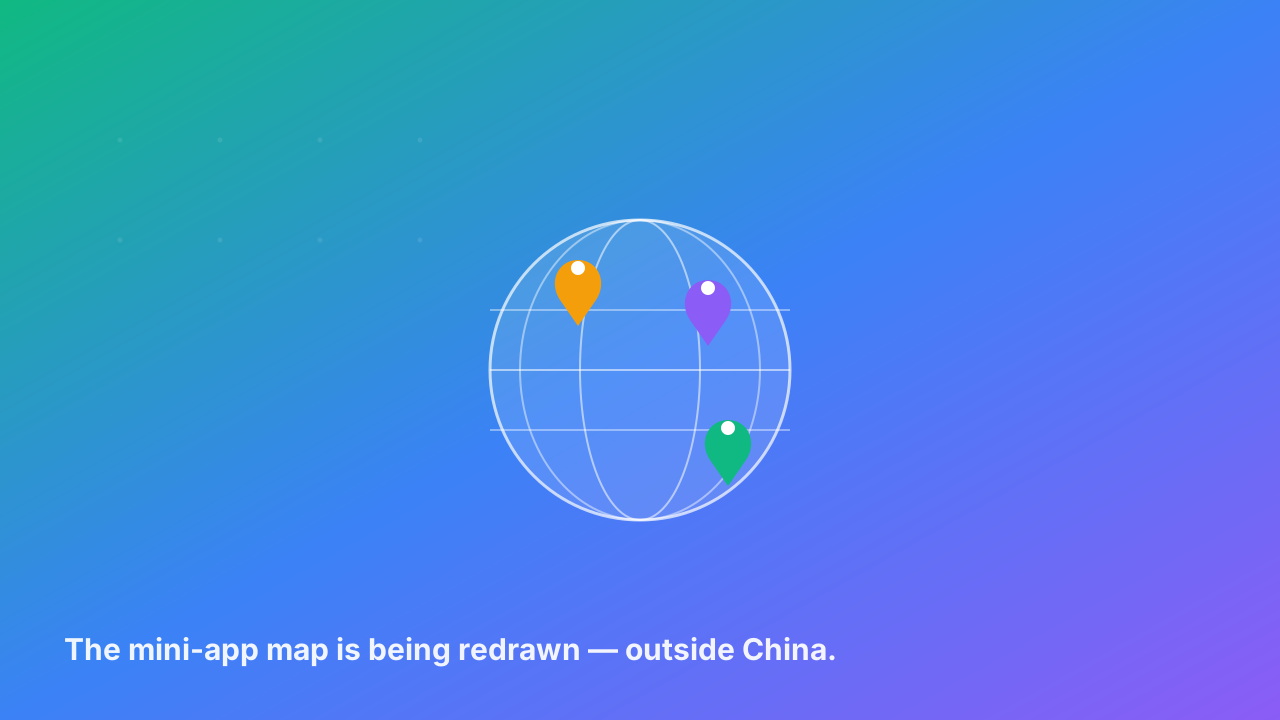
The map is being redrawn
For years "mini-program" meant "WeChat." That frame is now outdated. A genuine global layer of mini-app platforms has formed outside China, each anchored by a super-app with hundreds of millions of daily users. The question for any distributor is no longer whether to ship as a mini-program, but which hosts to target.
The platforms that already exist
- Telegram Mini Apps. Opened to developers in 2023, Telegram Mini Apps ride a messenger that crossed 1 billion monthly active users in March 2025. Around half of those users now interact with Mini Apps, and the format peaked at roughly 1.44 billion monthly Mini App users in late 2024 before settling into a more engaged base of 150–190 million after the tap-to-earn hype cooled. It is already one of the fastest-growing in-app environments on the planet.
- LINE Mini App. In Japan and Taiwan, LINE Mini App lets brands run membership, mobile order, and booking services without a separate install. As of late 2024 it listed about 18,000 released services with over 10.8 million monthly users in Japan, and LINE Taiwan alone reaches ~21 million users.
- Grab and Gojek. Southeast Asia's everyday-everything apps — transport, food, payments, deliveries — host merchant and financial services as programs inside the host, reaching users across Indonesia, Vietnam, the Philippines, and beyond.
- KakaoTalk. South Korea's super-app extends chat into payments, banking, and commerce through lightweight in-app services.
- The incumbents experimenting. WhatsApp (Meta) is piloting in-app business and payment surfaces; Snap Minis and Apple App Clips showed the Western appetite for "a slice of an app, no install." The format is proven; the open runtime is not.
What they have in common
Every one of these platforms converges on the same mechanics China proved:
- A trusted host with daily usage — the distribution surface is already open.
- Inherited identity and payment — users don't re-register or re-enter a card.
- A sandbox, not a free app — the host controls scope, data, and compliance.
- Instant access — a tap, not an install funnel.
That convergence is the signal. Mini-programs are becoming a global standard unit of distribution, not a regional quirk.
The catch: every platform is a wall
Each of these hosts is a closed garden. A program built for Telegram does not run on LINE. One built for Grab does not run on Gojek. Developers face the same fragmentation they fled when they left the app stores — except now multiplied across private runtimes, each with its own rules, review, and rent.
Where Cross Mini App fits
Cross Mini App is the open layer on top of this fragmented map. It is a single runtime and an open catalog: you build a governed mini-program once and drop it into any trusted host — Telegram, a wallet, a maps app, a super-app, a marketplace — without rewriting for each walled garden. Pre-compliant, sandboxed, and localized, these programs inherit the host's identity and payment like any native mini-app, but they travel. Hosts get vetted services they can embed in a line; merchants stop rebuilding per platform and per country; users get the service inside whatever app they already open.
Ship once, reach the map
The global mini-app map is real and growing. The winners won't be the developers who pick one walled garden — they'll be the ones who build once and distribute across all of them. Cross Mini App is building the open shelf so your program reaches users on every surface they already trust.
Related Posts
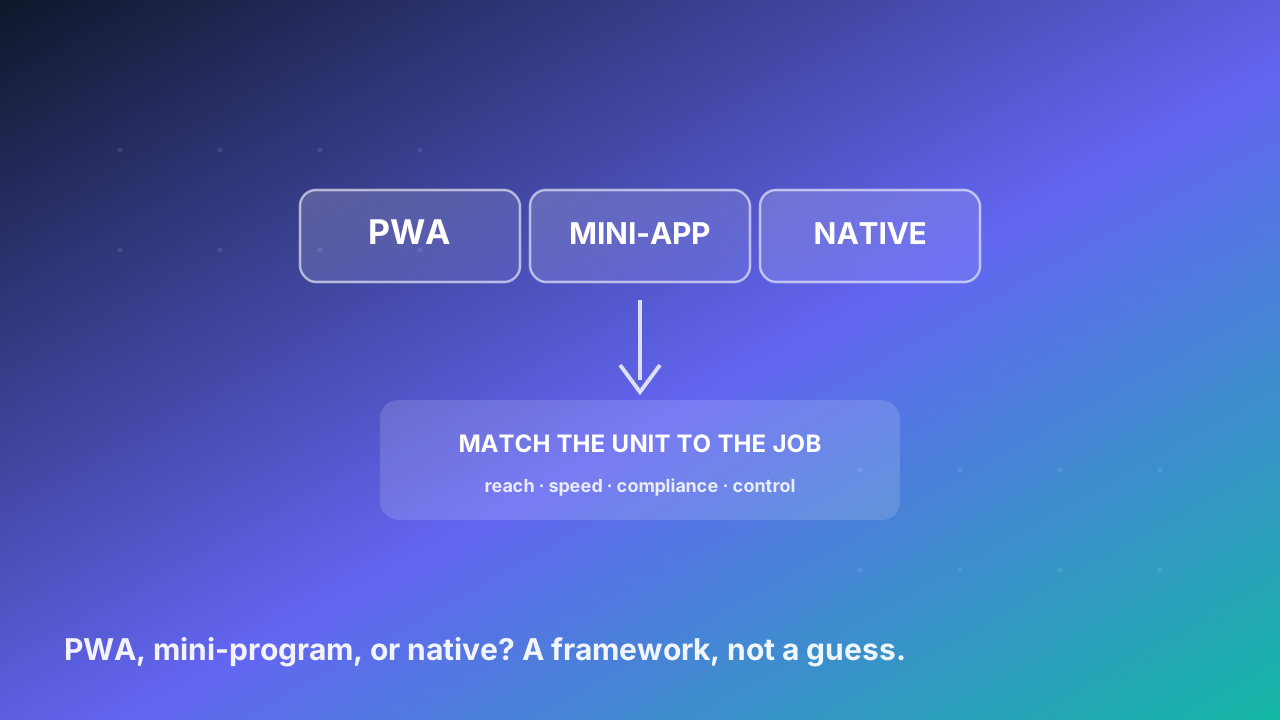
Stop guessing which app form to build. A practical 2026 framework maps your real constraints — reach, time-to-market, compliance, payment, control — to the right unit: PWA, native, or a governed mini-program.
Generosity is a moment — a story, a disaster, a friend's fundraiser. The gift is won or lost inside the app the donor already trusts, and a governed mini-program delivers it with proof.
China didn't adopt mini-programs — it built an alternative internet on top of them. WeChat alone runs ~4.3 million programs with ~945M monthly users and over ¥8 trillion in 2024 GMV. Here's how the model works and why it scales.