
The market is exploding. The gap is not closing.
Telemedicine is one of the fastest-growing sectors in digital health. The global telehealth and telemedicine market reached $152.44 billion in 2025 and is projected to hit $392.01 billion by 2030, a compound annual growth rate of 20.7% The Business Research Company. But almost all of that value is concentrated in the channels that already work: video visits on fast networks, native apps people bother to download, patient portals they log into. The patients who need care the most are not on those channels — and the market's growth is leaving them behind.
The real shortage is people, not platforms
You cannot app your way out of a physician gap. The World Health Organization now projects a global health-worker shortfall of 11 million by 2030, an upward revision from its earlier 10-million estimate WHO. Africa alone faces a projected shortfall of 6.1 million, while holding just 3% of the world's health workers but carrying roughly 24% of its disease burden WHO Regional Office for Africa. The region's average density of doctors, nurses, and midwives is 1.55 per 1,000 people — far below the WHO threshold of 4.45 needed for universal coverage. The constraint is human capacity, not software. But the right distribution layer can make the clinicians who do exist reach ten times more people.
China already proved the mini-program clinic
The most cited proof point is not a startup pitch — it is WeChat. Medical-service mini-programs on WeChat reached 308 million monthly active users, up about 34% year over year as of October 2024, sitting on top of 949 million overall WeChat mini-program users QuestMobile. No install. Shared identity and payments. Hospital-grade appointment booking, triage, and record access in a single tap. The clinic did not get downloaded — it moved inside the app people already open every day.
Africa is meeting care inside WhatsApp
In markets where app stores are thin and data is precious, the host is a messenger. AwaDoc, an AI health assistant built directly on WhatsApp, onboarded 11,000+ active users and processed 73,000+ health messages during its beta, on a platform with 1 billion+ monthly active users across Africa TechSoma. Symptom checks, triage, and referrals to verified doctors — with zero install and near-zero data cost. Care arrives exactly where the conversation already is.
India built a national health identity as a catalog
Scale is not only private. India's Ayushman Bharat Digital Mission had created 799 million Ayushman Bharat Health Accounts (ABHAs) with 671.9 million health records linked as of August 2025 Press Information Bureau, Government of India. It is consent-based, interoperable, and government-backed — effectively a public "catalog" of health identity that any compliant application can plug into. The infrastructure for last-mile care was treated as shared plumbing, not a walled garden.
The last mile is distribution, not invention
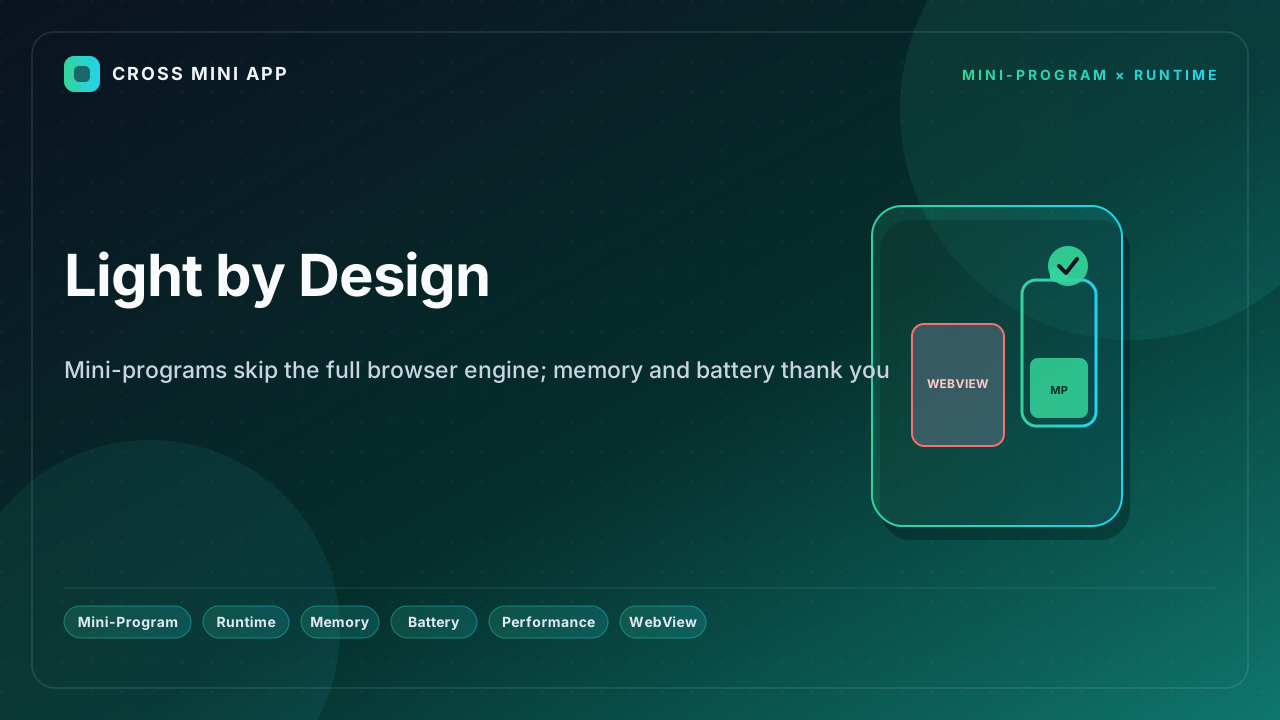
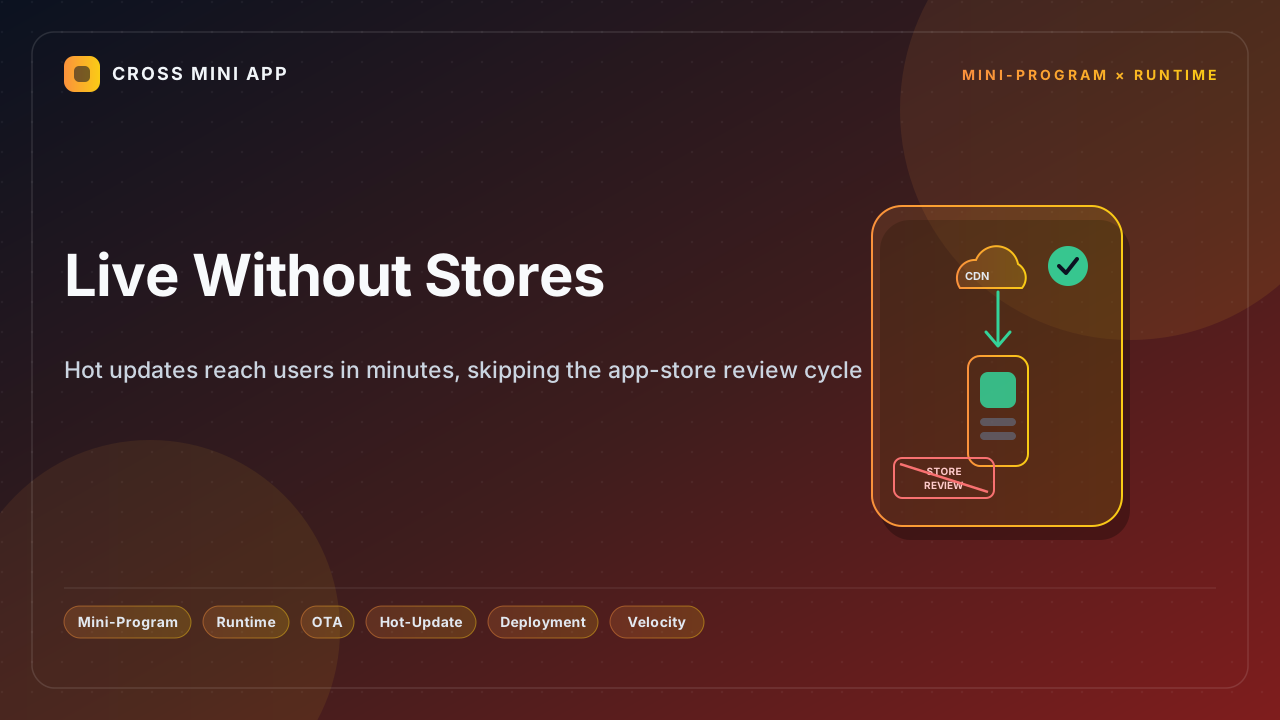
The technology to deliver remote care already exists. The bottleneck is the install barrier (a downloaded app), the login wall (yet another account), and the connectivity tax (heavy native clients on patchy networks). A governed mini-program running inside a trusted host dissolves all three at once. It inherits the host's identity, payments, and reach, and asks the patient for nothing new.
What this means for builders
If your health product assumes users will find, install, and log into your app, 2026 is the year to rethink it:
- Meet patients in the host they already trust — a super-app, a messenger, a government health app — instead of competing for a home-screen slot.
- Ship a bounded, governed unit hosts will actually embed. A sandboxed, consent-respecting mini-program — not a full native app — is the unit a hospital, insurer, or ministry will accept.
- Design for low-bandwidth, low-literacy, low-storage reality. The next billion patients often arrive on cheap Android with unstable data. Lightweight, instant experiences win.
Where Cross Mini App fits
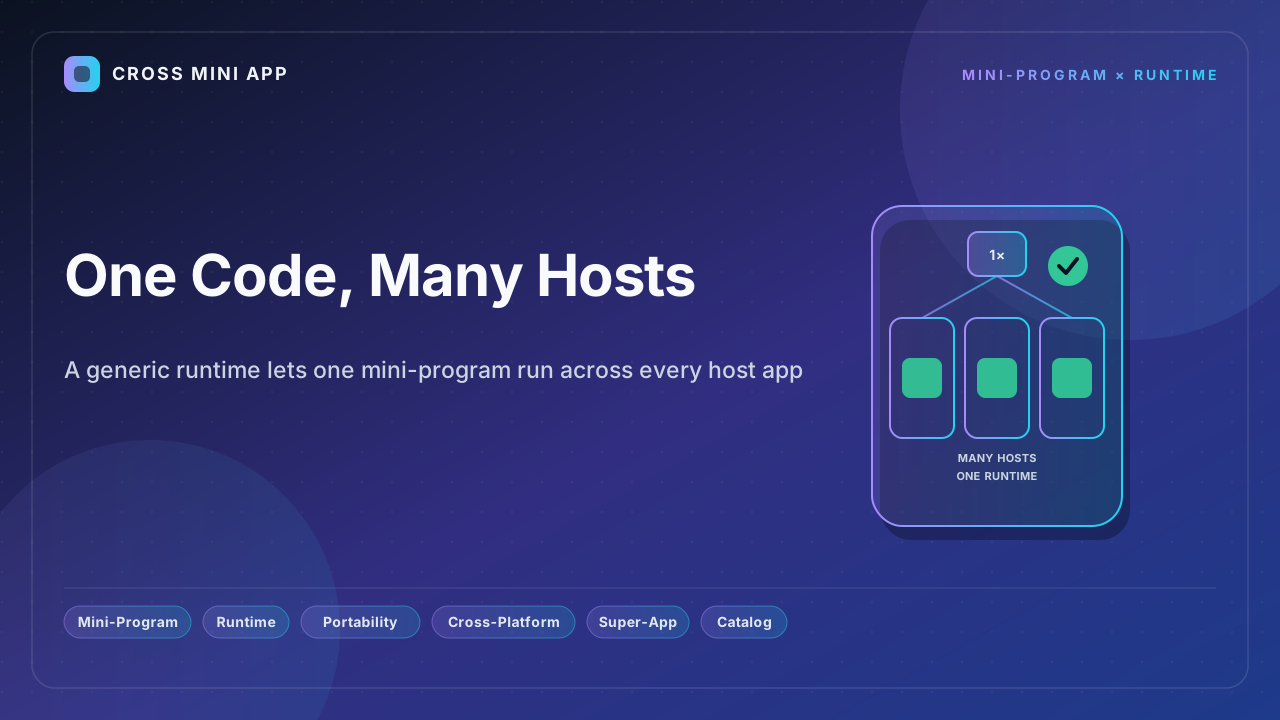
Cross Mini App is the runtime and the open catalog for the post-install era of care. You build a regulated health mini-program once and drop it into every trusted host — a super-app, an insurer, a government portal, a clinic network. Pre-compliant, sandboxed, and localized, these experiences reach patients without asking them to install anything. Hosts get vetted health services they can embed in a single line; developers stop rebuilding per store; patients get care inside the app already open. For health — where data sensitivity makes sandboxing and explicit consent non-negotiable — a governed cross-app runtime is the only safe unit to distribute at scale.
Care crosses the last mile as a mini-program
For two decades "build a health app, ship it to the store" was the default. In 2026 the growth is on the in-app surface, delivered as a governed mini-program through a cross-app runtime. Cross Mini App is building the shelf so the next billion patients meet care without installing a thing.