
The Technical Foundation of Cross-Platform Mini-Programs
At its core, a mini-program container is a sandboxed runtime environment that executes third-party code inside a host application. Unlike webviews, which are slow and inconsistent across platforms, modern mini-program containers deliver near-native performance with strong security guarantees.
In this post, we'll explore how Cross Mini App's container technology works under the hood.
Architecture Overview
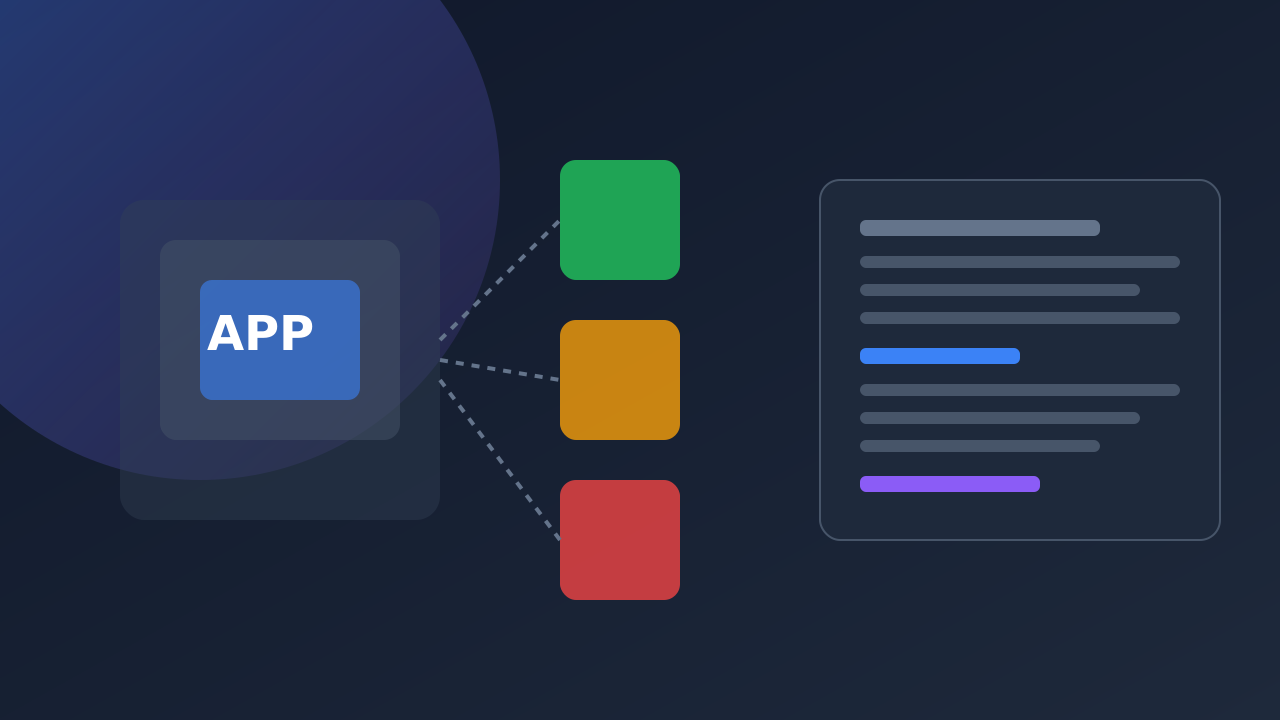
Cross Mini App's container is built on three layers:
Layer 1: The Sandbox
Every mini-program runs in an isolated JavaScript runtime with strict resource limits. We use a combination of V8 Isolates (for Android) and JavaScriptCore (for iOS) to ensure consistent behavior across platforms. Each program gets its own memory space, network context, and storage namespace — no cross-contamination between programs.
Layer 2: The Bridge Protocol
Mini-programs don't access device APIs directly. Instead, they communicate through our Bridge Protocol — a bidirectional message-passing system that:
- Serializes all API calls into structured JSON messages
- Validates permissions before executing any privileged operation
- Batches requests to minimize overhead
- Handles lifecycle events (pause, resume, destroy)
This is similar to how React Native's bridge works, but with additional security checks and multi-tenant support.
Layer 3: The Rendering Engine
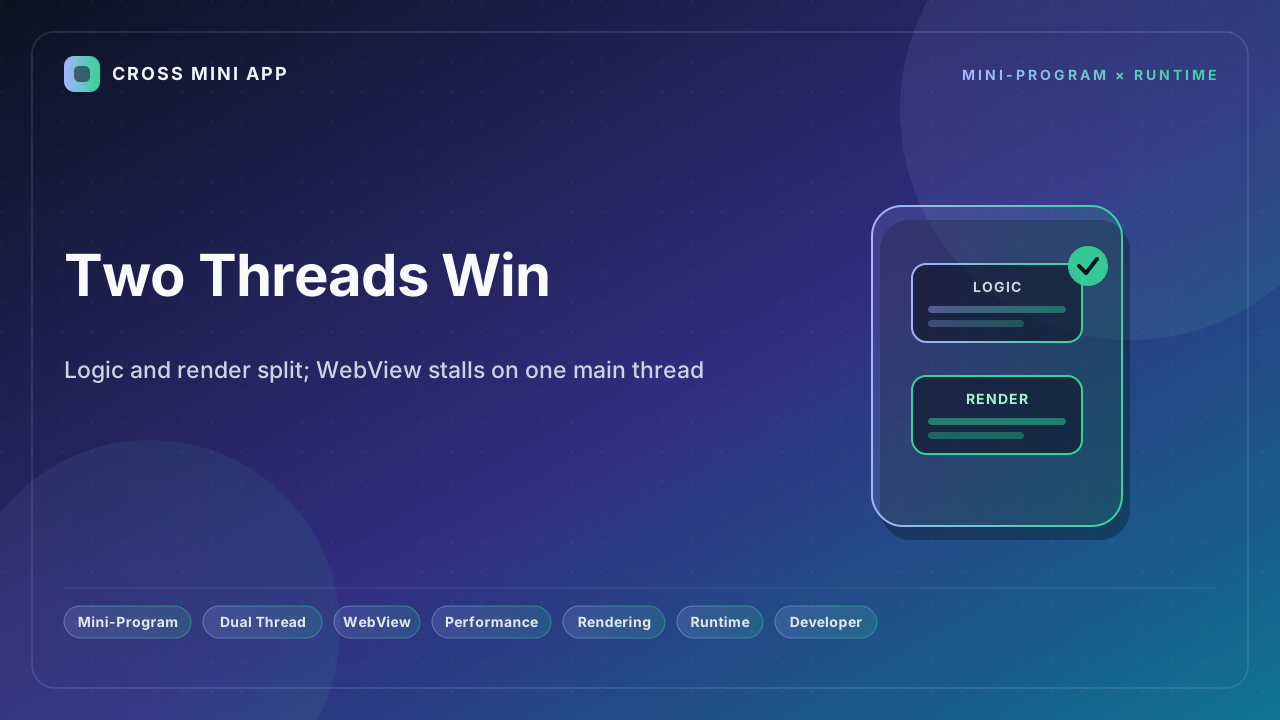
Rather than relying on WebView rendering (which is inconsistent and slow), Cross Mini App uses a lightweight declarative UI framework that maps directly to native views. The rendering pipeline:
- Program defines UI in JSX/TSX
- Virtual DOM diffs compute minimal changes
- Native view updates are batched and dispatched
- Platform-specific renderers handle iOS/Android differences
The result: smooth 60fps animations and identical visual output across every host app.
Security: Defense in Depth
Running third-party code in your app requires extreme caution. Cross Mini App's security model has four layers:
- Static Analysis: Every submission is scanned for known vulnerability patterns and malicious code signatures before approval
- Runtime Sandboxing: Programs can't access the host app's DOM, storage, or network without explicit bridge permissions
- Permission Model: Fine-grained permissions (camera, location, payments) require user consent per-program
- Continuous Monitoring: Runtime telemetry detects anomalous behavior and can automatically suspend programs
Performance Benchmarks
We benchmark Cross Mini App containers against standard WebView implementations:
| Metric | Cross Mini App Container | Standard WebView | Improvement |
|---|---|---|---|
| Cold Start | 280ms | 850ms | 67% faster |
| Frame Render | 3ms | 12ms | 75% faster |
| Memory Usage | 18MB | 45MB | 60% less |
| CPU per Minute | 2.1% | 7.8% | 73% less |
These numbers come from production measurements across our top 20 partner apps.
What's Next
We're working on:
- WebAssembly support for compute-intensive mini-programs
- Shared runtime mode that reduces per-program memory overhead by 40%
- AI-assisted review that cuts approval time from 24 hours to under 2 hours
- Offline-first mode with intelligent sync for programs that work without connectivity
The container technology that powers Cross Mini App is continuously evolving. Our goal is simple: make mini-programs indistinguishable from native apps, while keeping them safer than the web. If you're building mini-programs or considering hosting them, we'd love to show you how our container works — schedule a demo at crossminiapp.com/demo.