
Every few months another team announces it will bring mini-programs to a new market, usually after falling in love with the phrase — no app install. They wrap some web code in a shell and expect it to sweep the planet. Most of them lose money.
The reason is not the technology. It is the soil. In some regions a mini-program is a genuine shortcut past the app-store tax and the cold-start problem. In others, pushing one is just burning cash on a distribution channel users never asked for. The difference is not engineering — it is whether the local conditions let a lightweight, host-embedded surface actually win.
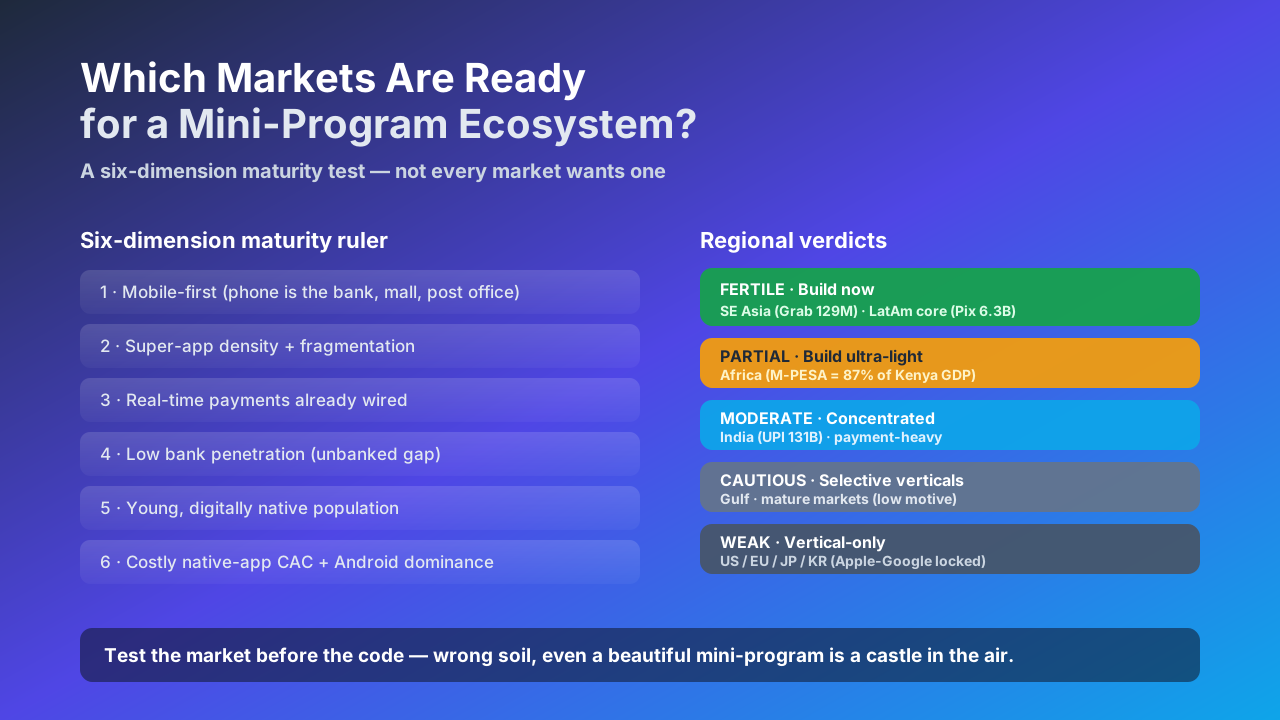
So before writing code, run a maturity test. Six dimensions decide whether a market is ready for a mini-program ecosystem.
1. Mobile-first, not mobile-only. The best markets skipped the desktop era entirely. The phone is the bank, the mall, and the post office. If people still sit at laptops to do anything that matters, a mini-program has no edge.
2. Super-app density plus fragmentation. The more dominant hosts competing for the same user — Grab, Gojek, LINE, GCash, Telegram, a national wallet — the more a merchant needs a single runtime that runs inside all of them instead of rebuilding for each.
3. Real-time payments already wired. A mini-program that cannot inherit the host's payment rail is just a webpage. QR schemes, instant bank transfers, and wallets must already be normal.
4. Low bank penetration. Where large shares of adults are unbanked or underbanked, a native financial app never reached them — which is exactly the gap a governed, host-embedded surface fills.
5. Young, digitally native population. A median age in the late twenties and a generation that learned to tap before it learned to type is the demographic where lightweight services spread by share, not by install ad.
6. Expensive native-app acquisition and Android dominance. When buying a user costs real money and most devices are Android, the economics of yet another standalone app collapse — and the case for mini-program distribution gets strong.
Here is the maturity test scored across regions.
| Region | Verdict | Markets | Why it matters | Timing |
|---|---|---|---|---|
| Southeast Asia | Fertile | Indonesia, Vietnam, Philippines, Thailand, Malaysia | Grab 129M annual users across 8 countries; digital payments hit $1.3T in 2025 (+31%); QRIS 320M transactions; Thailand PromptPay used monthly by 94% of adults; GCash 92M; smartphone >80%; median age 30.9; ~30% unbanked | Build now |
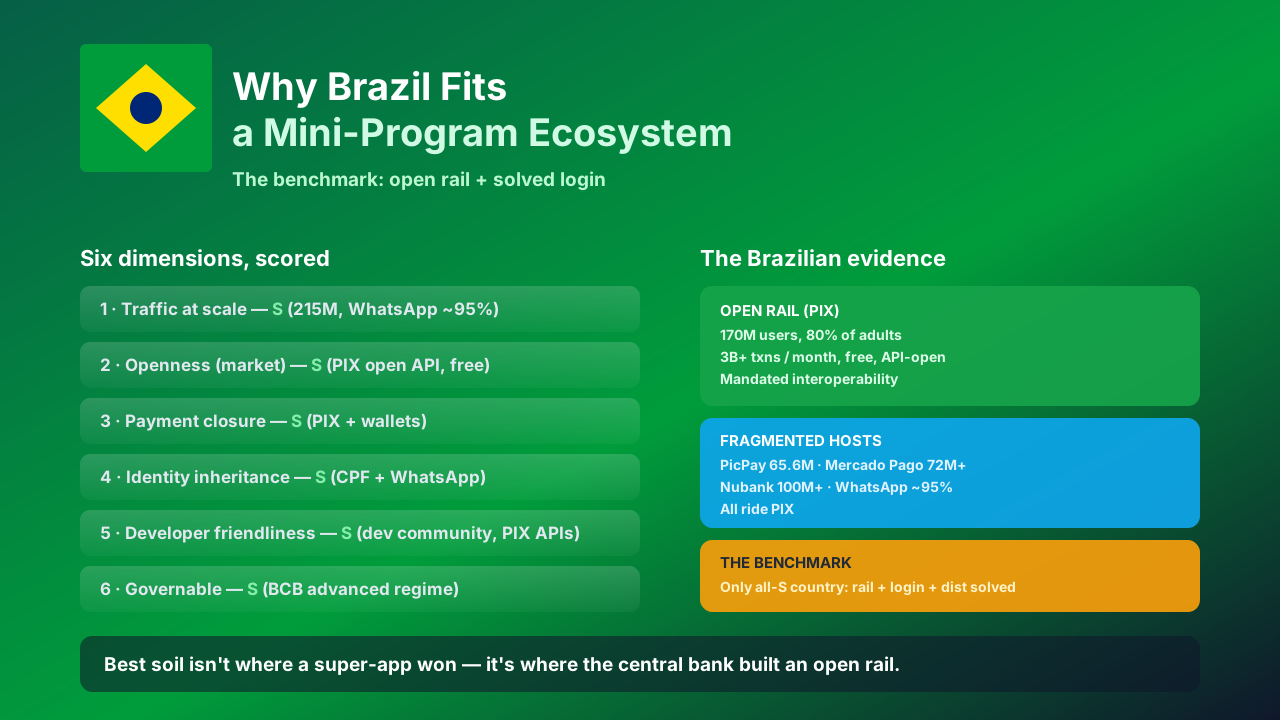
| Latin America core | Fertile | Brazil, Mexico, Colombia | Pix 6.3B transactions in 2025; Nubank 130M; Mercado Pago 162M; WhatsApp on 95% of Brazilian phones; smartphone ~83%; 100M+ unbanked; Colombia leads the world in social-commerce spend | Build now |
| Africa | Partial | Kenya, Nigeria, East Africa | M-PESA processes volume equal to 87% of Kenya's GDP; wallet adult penetration >70%; but smartphone only ~54% (Ethiopia 15%); feature phones and agent POS still dominate | Build ultra-light, progressive |
| India / South Asia | Moderate | India | UPI 131B transactions; 420M wallet users; but the payment layer is so dominant and the content layer so weak that one runtime rarely fits all | Moderate, highly concentrated |
| Gulf (Middle East) | Cautious | Saudi, UAE | stc pay in Saudi, near-universal banking in UAE, low unbanked — native apps already suffice except niche government and travel surfaces | Selective verticals only |
| Mature markets | Weak | US, EU, Japan, Korea | Distribution locked by Apple and Google, web and native already mature, regulation strict — motivation is low except specific verticals like the EU digital-identity wallet and in-messaging mini-apps | Low, vertical-only |
Two facts cut through the noise. In Kenya, M-PESA moves volume equal to 87% of GDP — the phone there is the bank, full stop. Colombia leads the world in social-commerce spending yet nearly a quarter of its population is offline. Soil is not connectivity; it is relevance. A market can be hyper-social and still structurally unready.
Cross Mini App fits the first tier best: regions with traffic, payments, and fragmented hosts but no shared open runtime. Universal runtime plus open catalog means you build once and run inside Grab, Gojek, LINE, GCash, and Telegram — inheriting identity and payment, sandboxed and governable, updated over the air. Go deep on Southeast Asia and Latin America core before spraying widely.
The iron rule: test the market before you write the code. Get the soil wrong and even a beautiful mini-program is a castle in the air.