
Order a mango sticky rice from a Bangkok street cart and the vendor flashes a PromptPay QR — not a bank app, not a wallet, just a national code tied to their phone number. Thailand did what most markets only talk about: it built the rail first, by central-bank mandate, and let private super-apps ride on top. That order is why the country is such natural soil for mini-programs.
The opportunity is not another wallet. It is a lightweight program that opens inside TrueMoney or LINE, already logged in, already able to pay through PromptPay — and for the tourists arriving by the million, already cross-border ready.
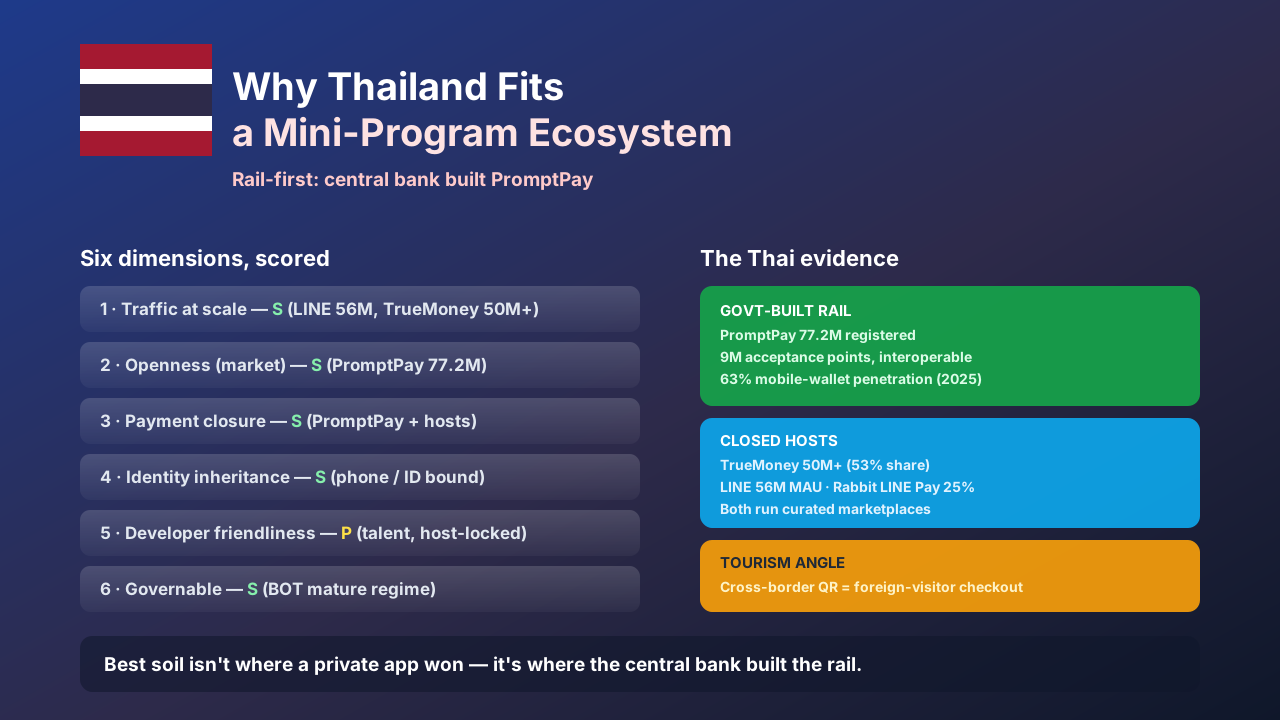
The six dimensions, scored on Thai ground
1. Traffic at scale. LINE Thailand carries 56 million-plus MAU, and TrueMoney serves 50 million-plus registered users with 17 million-plus active. Mobile-wallet penetration reached 63% in 2025. This is daily, habitual attention across two entrenched hosts.
2. Openness, at the market level. The Bank of Thailand mandated PromptPay, now with 77.2 million registered users and 9 million acceptance points, interoperable across every bank and wallet. The rail is open by regulation even though the super-apps keep their mini-app surfaces curated.
3. Payment closure. A mini-program inherits PromptPay plus TrueMoney (the "Alipay of Thailand," ~53% wallet share) or Rabbit LINE Pay (~25% share, inside LINE). Real-time, near-free settlement is the default for street vendor and enterprise alike.
4. Identity inheritance. This is Thailand's quiet strength. PromptPay binds directly to a phone number or national ID, so a mini-program opened through a host starts pre-authenticated. Phone-native login means near-zero sign-up friction.
5. Developer friendliness. Solid engineering talent and low build cost, but the ecosystem is host-locked: TrueMoney and Rabbit LINE Pay run curated marketplaces, not self-serve platforms. Lightweight distribution beats the native-app install wall.
6. Governable. The Bank of Thailand runs a mature e-money and payment-facilitator regime, with KYC and consumer protection enforced at the wallet level. A sandboxed, takedown-capable runtime fits cleanly inside it.
| Dimension | Score | Thai evidence |
|---|---|---|
| Traffic | S | LINE 56M MAU, TrueMoney 50M+ |
| Openness | S | PromptPay 77.2M, BOT mandate |
| Payment | S | PromptPay + TrueMoney / LINE Pay |
| Identity | S | PromptPay bound to phone / ID |
| Developer ease | P | Talent strong, host-locked |
| Governance | S | BOT mature regime |
Why tourism makes it urgent
Thailand welcomed tens of millions of tourists a year before recent slowdowns, and cross-border QR payment is now a policy priority. A mini-program that opens inside LINE or TrueMoney and settles through PromptPay is not just domestic convenience — it is the cheapest foreign-visitor checkout already wired into the rail. Closed hosts on an open rail make that the obvious place for a universal runtime to win.
The CrossMiniApp angle
CrossMiniApp is a universal runtime plus an open catalog. You build the mini-program once and it runs inside TrueMoney, LINE, and the wallet surfaces — inheriting each host's identity and payment, sandboxed and governable, updatable over the air. Thailand's rail-first structure is the argument: the government built the interoperable layer, the hosts stayed closed, and the value is in a runtime that reaches them all without renegotiating each wall.
The rule
The best mini-program soil is not where a private app won. It is where the central bank built the rail first — and in Thailand, that rail is PromptPay.